Not every gift comes in a tidy box. Cylinders, tall bottles, lumpy plush animals and anything with a handle can make even careful wrappers feel defeated, and the usual advice about sharp corners and neat folds simply does not apply. If you have ever stood over a round gift with a roll of paper and a roll of tape, wondering where to begin, this article is for you.
The trick is to stop fighting the shape and start working with it. Soft materials, gathered ends and a calm approach produce results that look chosen rather than improvised. None of what follows needs special skills, and nearly all of it uses things you already have at home.
Start by choosing materials that bend
Thin wrapping paper tears easily around curves and corners, and it is the reason awkward shapes feel so hard. Switch to something sturdier and more flexible and the whole problem gets much smaller.
- Kraft or brown paper. It folds cleanly, tolerates being pulled and takes a pen beautifully for tags and notes.
- Fabric. A scarf, a tea towel, a napkin or a square of plain cloth stretches to follow a shape, and the recipient can use it again.
- Tissue paper. It is gentle, fills gaps and softens edges, though it needs a second layer or a bag around it for structure.
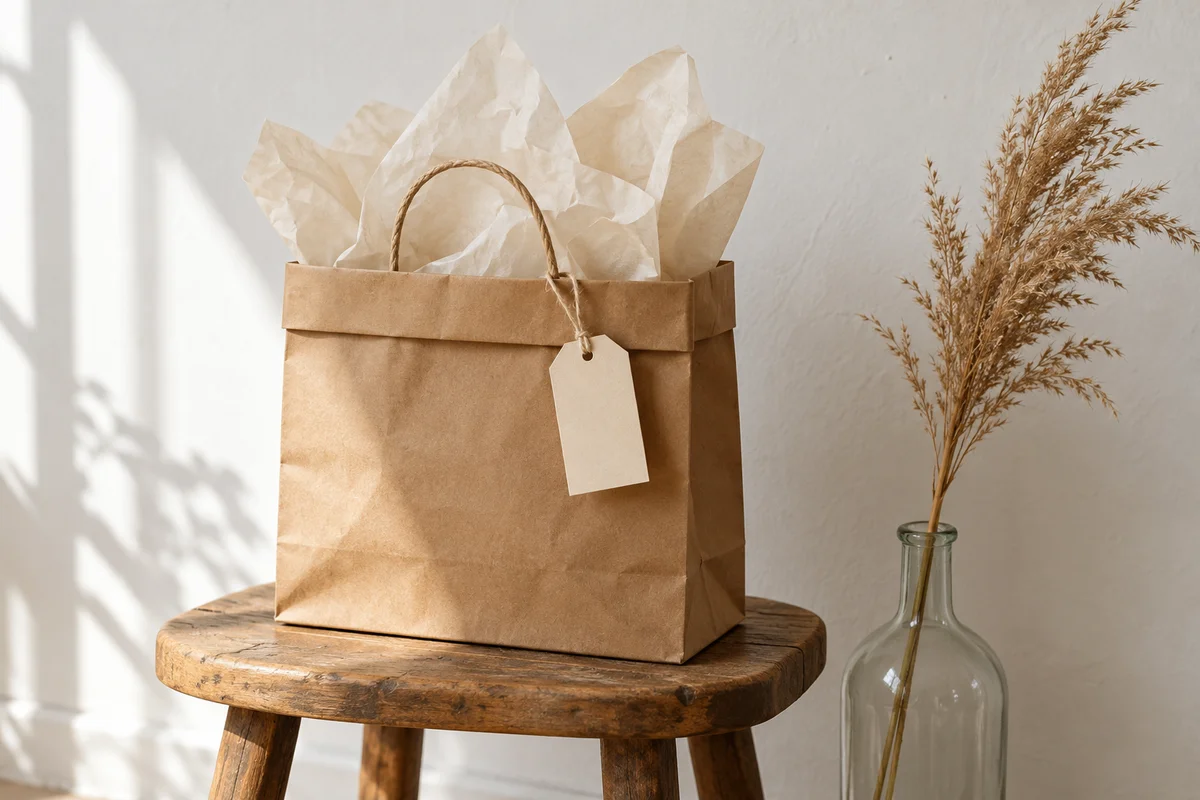
- Paper or cloth bags. A bag does the hard part for you. Tissue at the top does the rest.
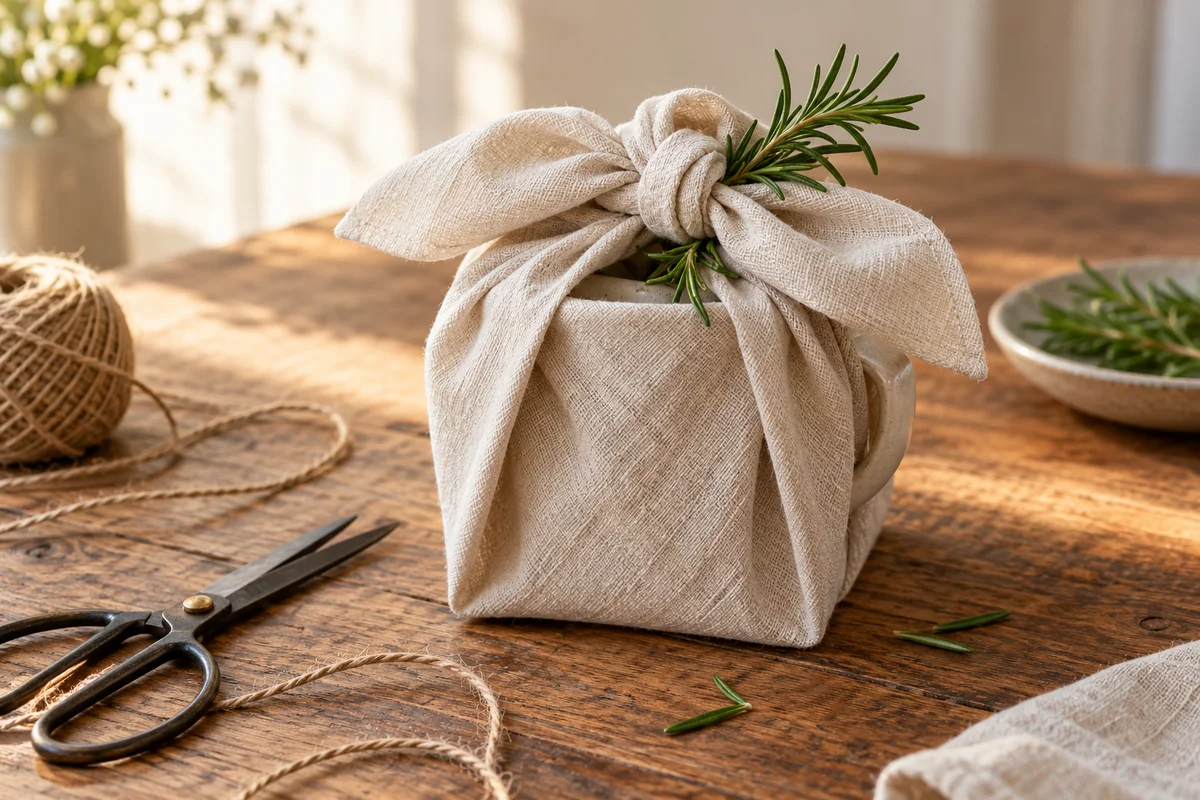
Cloth wrapping can be especially forgiving, since it stretches and can be tied securely. If you are new to wrapping awkward gifts, start with fabric before you try paper.
Round and tall gifts
Cylinders are the most common awkward shape, and thankfully the easiest to solve. The goal is to avoid sharp folds altogether.
The gather-and-tie method
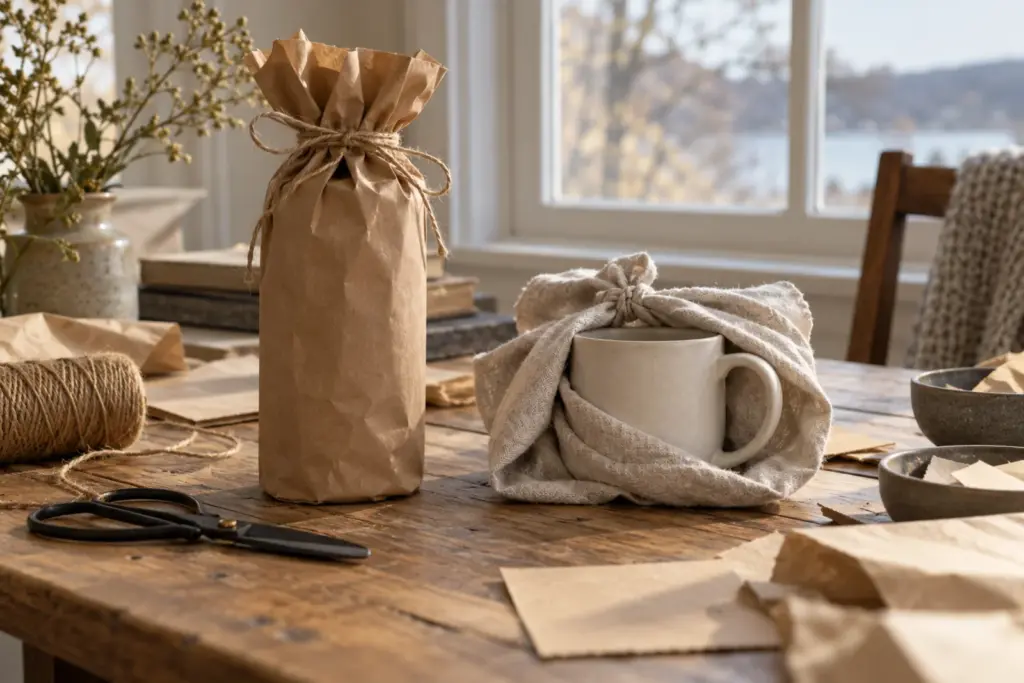
Cut a rectangle of paper a bit taller than the item and long enough to wrap all the way around with a small overlap. Roll the item up in it, tape the seam, then gather the extra paper at the top and bottom and tie each end with string or ribbon. This gives a neat, deliberate look without the need to fold a single corner.
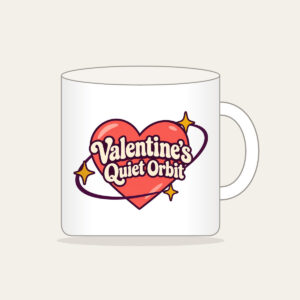
Valentine’s Quiet Orbit Mug. Valentine’s Quiet Orbit Mug features retro artwork showing one large coral heart encircled by a dark plum orbital line and three little ochre stars. The lettering reads “Valentine’s Quiet Orbit”.
The cloth knot
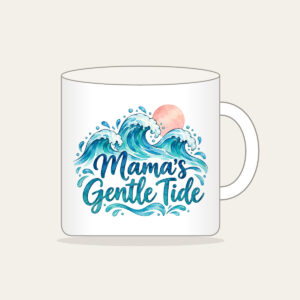
Mama’s Gentle Tide Mug. Mama’s Gentle Tide Mug features watercolor artwork showing three flowing turquoise ocean wave crests and a small blush sun. The lettering reads “Mama’s Gentle Tide”.
Irregular shapes with no flat sides
Some gifts have no obvious front or back: a plush toy, a bundle of soft items, a keepsake with a handle. For these, forget the idea of wrapping the object itself.
Put it in a container, then wrap the container
If an item has no flat sides, place it inside a bag or a small box and wrap that instead. Tissue paper tucked around the object keeps it steady and adds a soft finish. The container does not need to match the shape exactly, and a slightly oversized one can look generous rather than clumsy.
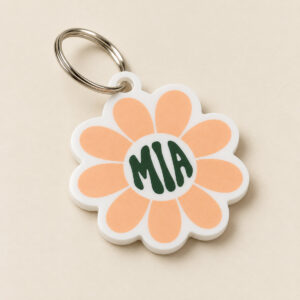
Apricot Daisy Name Tag is another design to consider for this gift idea.
Build a nest
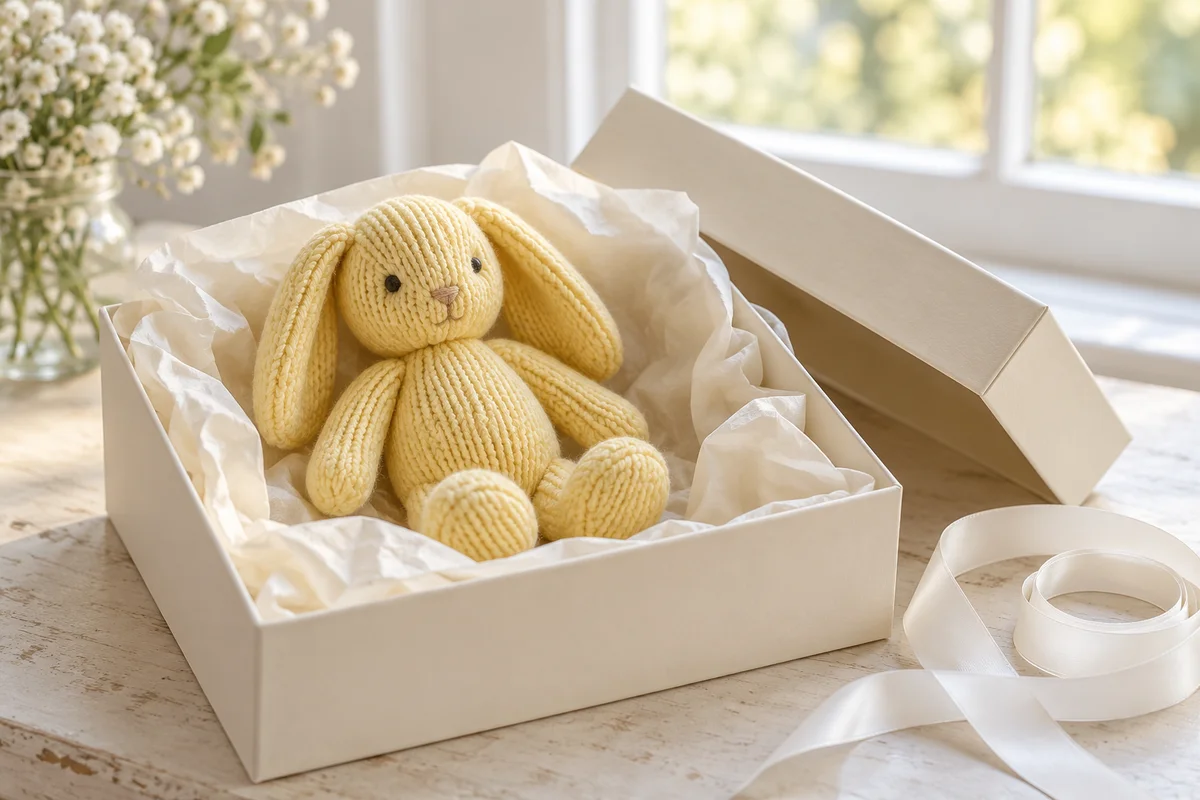
Line the bottom of a box with crumpled tissue, set the item in the middle and add more tissue around the sides so nothing slides. Close the lid and wrap it as you would any box, or skip the paper entirely and tie the box with ribbon. The box becomes the neat shape, and the awkward gift becomes a surprise.
Match the wrap to the person
Awkward shapes give you permission to be a little playful, so let the wrapping say something about the recipient. A friend who loves gardening might like a gift gathered in paper with a leaf tucked into the twine. A busy colleague may prefer something tidy in a plain bag, easy to carry home on the train. A child usually enjoys the rustle of tissue and the chance to dig for the surprise.
It also helps to think about where the gift will be opened. At a party with many guests, a bag or a cloth wrap opens quickly and keeps the mood moving. At a quiet breakfast, a more layered wrap lets the moment last. The shape stays the same, but the choices around it can change to suit the setting.
Keep the decoration modest
Awkward shapes already have plenty of character, so decoration works best when it is light. A sprig of greenery, a handwritten tag or a length of twine can lift plain wrapping all by itself.
Avoid piling on ribbons. On a curved surface, extra ribbon slides and bunches, and the result looks fussy. One well-placed piece of twine tied with a simple bow is usually better than three layers of trim. If you want color, choose it in the paper or fabric and keep the trim neutral.
- Tuck a dried flower or a leaf under the twine for a quiet seasonal touch.
- Use a tag with a hole punched in the corner so it can hang from the knot.
- Tie a tiny bell or a wooden bead onto the twine for a playful finish on a child’s gift.
Protect what is inside
Wrapping is partly decoration and partly protection. If an item is fragile or has parts that might snap, add padding before you decorate. A gift that looks lovely but gets damaged on the way to the recipient helps no one.
When a gift needs to travel, think about the journey as well as the look. Padding inside the wrapping is more useful than extra paper outside it, and a snug box around the gift gives it a stable shape. How a parcel travels depends on where the person lives and on the carrier, so see the shipping page if your gift is going to someone far away, and plan to order early so the wrapping is never a last-minute scramble.
Finally, make sure the wrapping can be opened without difficulty. Knots that need scissors, layers of tape and tight twine are charming right up until someone is trying to open them with a coffee in one hand. Choose a bow that slides, a knot that pulls loose or a tape tab that lifts easily.
These gift ideas include made-to-order designs. Choosing finished artwork does not mean an item is in stock or ready for immediate delivery. Some selections use finished artwork; only choose custom text where the listing offers it. Check each product’s options and the shipping information before planning when to give it. The photographs illustrate gift-giving ideas; use each product’s listing to see its own design.
Valentine's Quiet Orbit Mug
- Free gift
$21.95In stock
Mama's Gentle Tide Mug
- Free gift
$21.95In stock
Apricot Daisy Name Tag
- Free gift
$24.95In stock
Add a clear tag
Write the recipient’s name on the tag and, if you like, a short line inside. If you are giving several gifts at once, a clear tag prevents mix-ups, and a tag in your own handwriting makes even the plainest wrapping feel personal. Our article on writing the note that goes with the gift can help if you are staring at a blank card.
If the gift is personalized, a line about what is on it and why you chose it turns a printed detail into a story the recipient will retell. For more general ideas on presentation, the guide to wrapping it up covers simple wraps for gifts of every kind.
Practice with scrap first
If you are unsure how a method will look, try it first with scrap paper or a spare piece of cloth. Five minutes of practice shows you how much material you need and where the awkward folds fall. It also removes the stress of cutting into your good wrapping, which is when most people rush and make mistakes.
Use a similar-sized object, such as a jar or a cup from your kitchen, as a stand-in. Test the gather-and-tie method, then the cloth knot, and see which one feels natural in your hands. Calm, unhurried wrapping usually looks the most deliberate. And if you are still choosing what to wrap, the gift guide and the shop are good places to begin.
FAQ
What is the easiest way to wrap a round gift?
Roll it in a rectangle of sturdy paper, tape the seam, then gather and tie each end with string or ribbon. Alternatively, knot it into a square of fabric.
How do I wrap something with no flat sides?
Put it inside a bag or a small box, pack tissue around it so it stays steady, and wrap the container instead of the item itself.
Which paper works best for curved gifts?
Sturdy, flexible materials such as kraft paper and fabric. Thin wrapping paper tears easily around curves and corners.
How can I stop ribbons from sliding on a curved gift?
Use less of them. One length of twine tied with a simple bow sits more securely than several layers of ribbon on a rounded surface.