
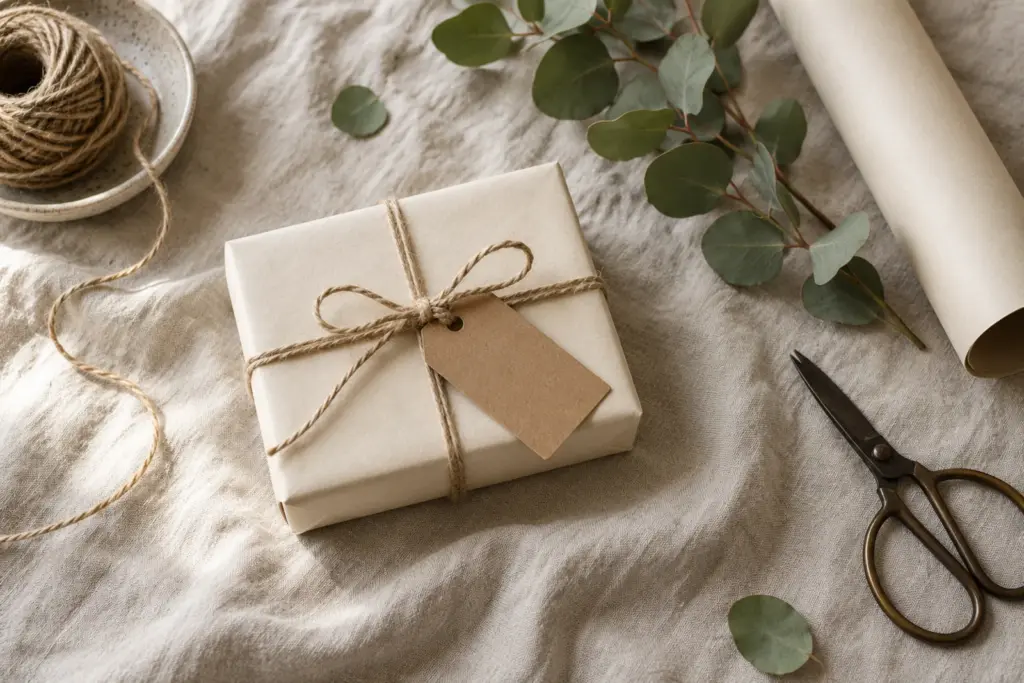
Presentation does not need to be elaborate. Plain paper, a single ribbon and a handwritten tag go a long way, and most of the gifts people remember were not wrapped by a professional. They were wrapped by someone who took a few quiet minutes to make the opening feel like part of the present.
This guide is for anyone who wants their gifts to look cared for without turning wrapping into a project. It covers what to gather, how to reuse things you already own, what a tag can do that paper cannot, and how to think about the moment of opening, which is the part the recipient will actually remember.
Think about the opening, not the paper
When you wrap a gift, you are designing a very short experience: the few seconds between “here, this is for you” and the first look at what is inside. Everything you do in the wrapping either adds to that moment or gets in its way.
That reframes the choices. A huge bow that takes a minute to wrestle off is a speed bump. A wrapping so tight that the recipient has to hunt for scissors is a small annoyance. A layer of tissue, a pleasant rustle and a ribbon that slides off with one pull are all part of the experience in a good way.
Ask yourself three questions before you start. Who is this for, and are they the sort to savor or to tear? Where will they open it, at a table with others or alone on the sofa? And what is the first thing you want them to see when the paper comes off?
A small kit that covers nearly everything
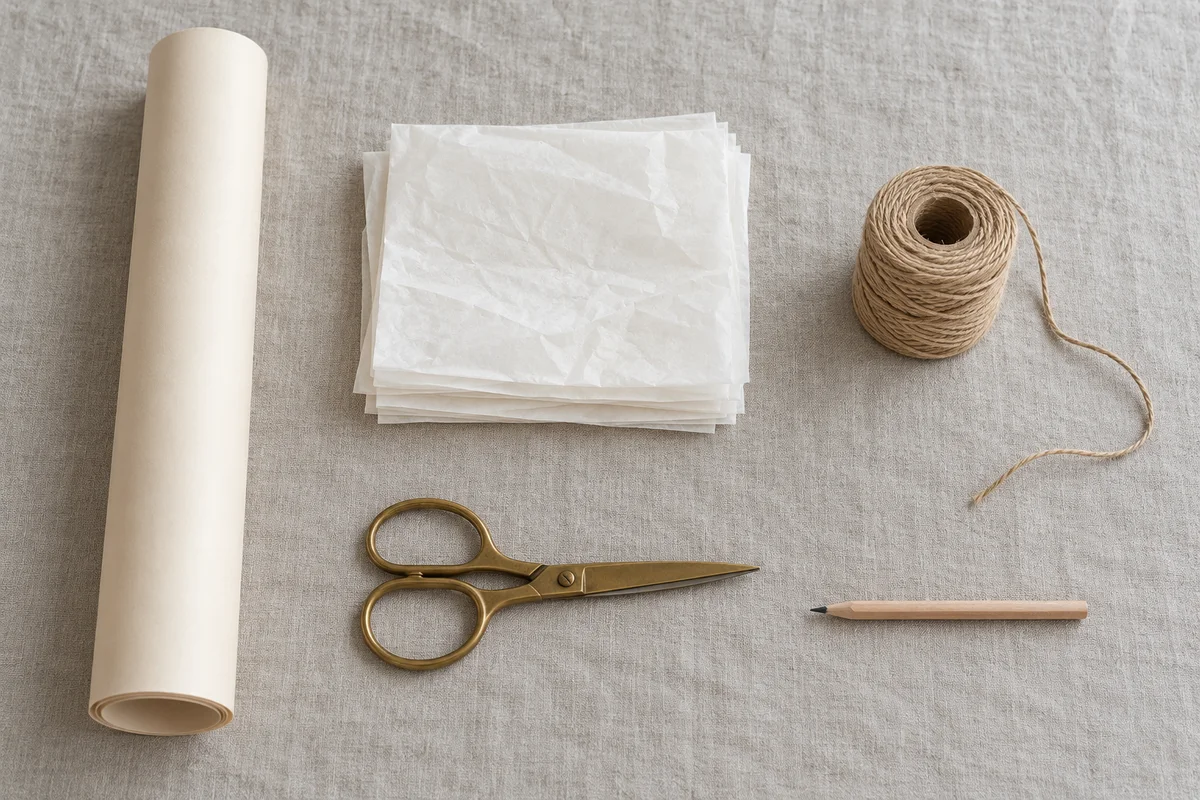
You do not need a craft room. A short list of basics handles almost every gift, and you can keep them together in one drawer or box so wrapping never feels like a hunt.
- One roll of plain paper. Kraft, cream or any solid color goes with everything and lets the tag and trim stand out.
- Soft tissue paper. It cushions small gifts, hides what is inside and adds a pleasant rustle.
- Twine or ribbon. One kind is enough. Choose a color that suits the person, not the season.
- Tags or blank cards. Make them larger than you think you need, so there is room for a real sentence.
- Tape, scissors and a pen you like. A pen that writes smoothly makes you want to write more.
With that kit, you can handle a mug, a small box, a candle, a book and most things in between.
Reuse what you already have
Some of the nicest presentations cost nothing. A fabric bag, a scarf or a clean jar can hold a small gift and become a second gift in its own right. Tie it with ribbon or kitchen twine and you are done.
Fabric and scarves
A square of cloth, folded around a small item and knotted at the top, looks intentional and can be used again. It is especially forgiving for items that do not fit neatly in a box, and it avoids the problem of paper tearing at the corners.
Jars, tins and baskets
A clean glass jar works well for small, light items, and a basket or a shallow tin can hold a little collection, such as tea with a mug, or a candle with a pair of socks. Fill gaps with crumpled tissue so nothing rattles.
Paper you already own
A page from a favorite old map, a sheet of plain brown packing paper or even the gift’s own shopping bag, turned inside out, can all become wrapping. The look is relaxed and a little handmade, which suits many people better than glossy paper.
Let the tag do the work
A short line about why you chose a gift matters more than the paper it comes in. The tag is where the personal part of the gift lives, and it is the one detail the recipient is almost certain to read.
For something personalized, tell them what is on it and why. A name, a date or a short phrase becomes a story when you explain where it came from, and that story is the best way to start the life of the gift. You might write, “I put your nickname on it because I could never say your full name without laughing,” or “That date is the day we first met.”
Three tag ideas that never fail
- The memory. “I thought of the afternoon we drove all the way to the lake.”
- The reason. “I picked this because you always start the day with a second cup.”
- The wish. “I hope this makes your mornings a little slower.”
If you want more help finding the words, our guide to writing the note that goes with the gift has prompts for people who do not think of themselves as writers.
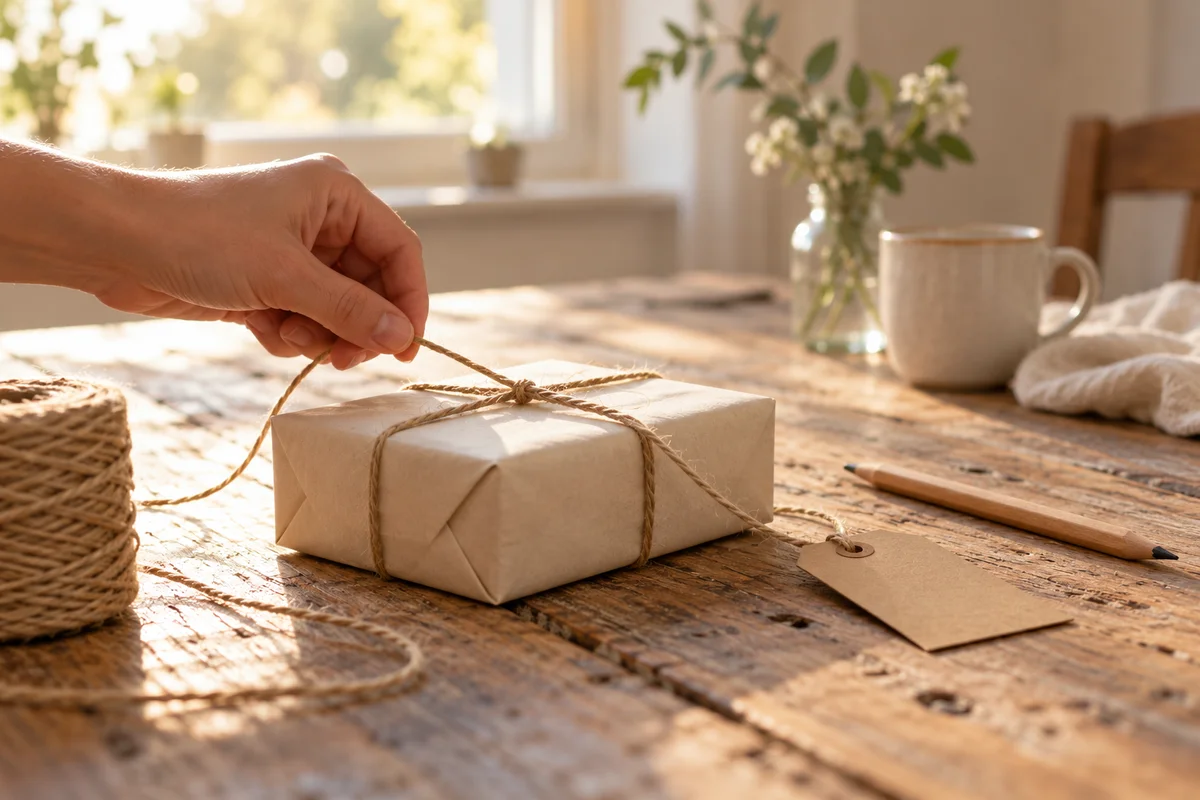
Matching the presentation to the gift
Different gifts invite different treatments, and thinking about the object first will save you time. Here are a few starting points built around gifts people choose often.
A keepsake like an ornament
Navy and Cream Diamonds and Stars Ornament. Navy diamonds alternate with cream stars in a tight, repeating pattern that reads crisp and classic. The two-color scheme keeps it sharp and tidy, while the starry points add a hint of playfulness, much like the geometric motifs that once decorated a country-fair stage.
A mug with a few extras
Starry Navy Sky with an Open Center Mug. Tiny stars and a thin crescent fill a deep-blue sky, gathering around an empty central rectangle that stays open and still. The restful night scene leaves room for your imagination to wander, and the repeated stars give it the steady, gentle rhythm of a lullaby told in the dark. For related guidance, see wrapping awkward-shaped gifts.
A gift that is already a set
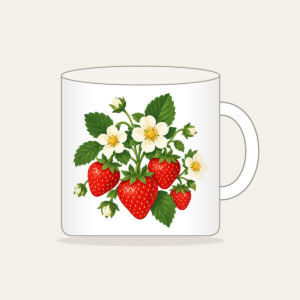
Strawberry Cluster with Blossoms Mug. Plump red strawberries gather in a tight cluster, their seeds picked out in cream, while small white blossoms and tiny green leaves tuck in around them. The mood is early summer: sweet, bright and gently nostalgic.
These gift ideas include made-to-order designs. Choosing finished artwork does not mean an item is in stock or ready for immediate delivery. Some selections use finished artwork; only choose custom text where the listing offers it. Check each product’s options and the shipping information before planning when to give it. The photographs illustrate gift-giving ideas; use each product’s listing to see its own design.
Navy and Cream Diamonds and Stars Ceramic Ornament
- Free gift
$19.95In stock
Starry Navy Sky with an Open Center Mug
- Free gift
$21.95In stock
Strawberry Cluster with Blossoms Mug
- Free gift
$21.95In stock

Group gifts and multiple recipients
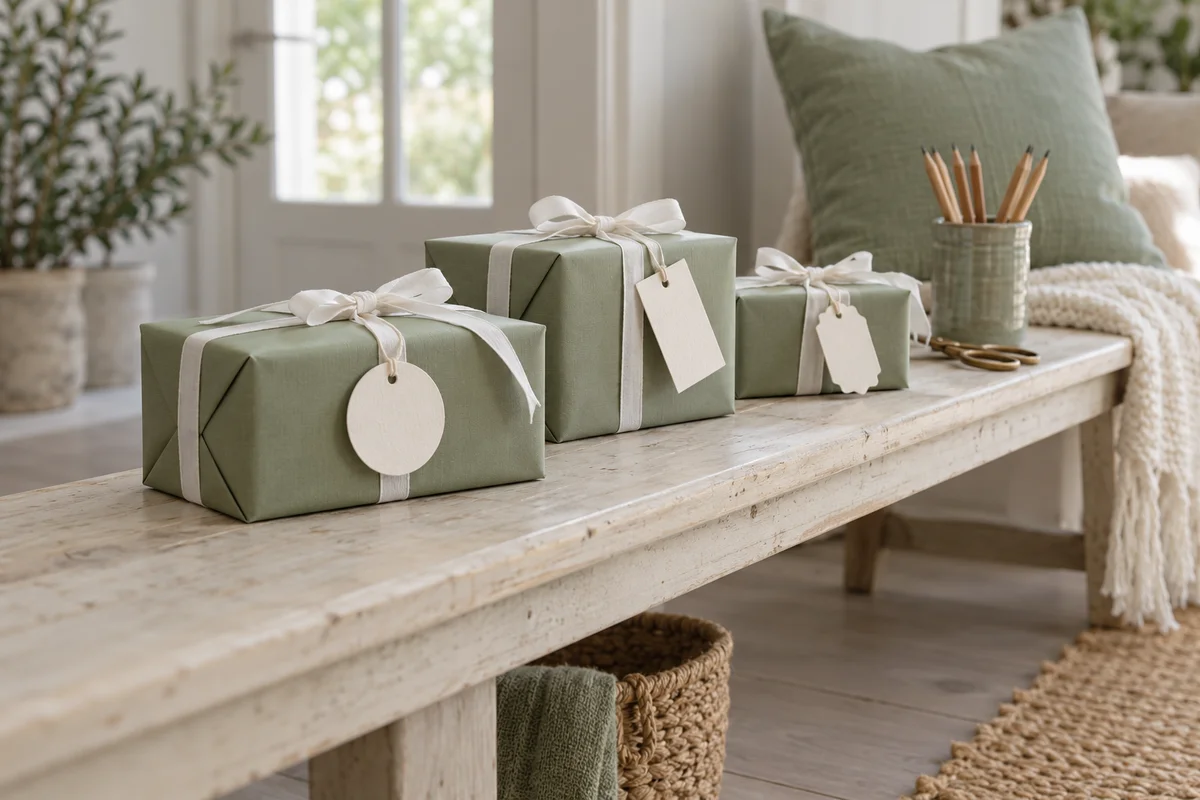
If you are wrapping several gifts at once, make one decision and repeat it. Use the same paper and the same ribbon for everything, and let the tags carry the individuality. This looks more polished than a collection of different papers, and it is faster too.
Write the name of the recipient clearly on each tag so there are no mix-ups, and consider adding a small mark that only you would recognize, such as a tiny drawing or a color of ink, so that you can sort the pile in the dark on a busy morning. When you give several gifts to a household, a larger bag or basket for the whole set can make the handover feel like a single moment.
Timing and a little calm
Wrapping goes badly when it is the last job of a long day. If you can, wrap a few days ahead and give yourself a quiet half hour with something to drink and music you like. A rushed wrap shows in crooked edges and too much tape, while an unhurried one tends to look deliberate even when the paper is plain.
If your gift needs to travel to someone far away, plan the delivery first and wrap second, since how the package gets there depends on where the person lives and on the carrier. The shipping page explains how delivery is handled, and our guide to gifting someone in another country offers planning ideas for longer journeys. Whatever the distance, order early and leave plenty of time so the wrapping is a pleasure rather than a scramble.
And if you are still choosing what to wrap, the gift guide sorts ideas by person and occasion.
FAQ
Do I need special supplies to wrap a gift nicely?
No. A roll of plain paper, some tissue, twine or ribbon, tape and a pen cover almost every gift. Fabric bags, scarves and clean jars can also stand in for paper.
What should I write on a gift tag?
One short, specific line: a memory, a reason you chose the gift, or a wish. For a personalized gift, mention what is on it and why you chose it.
Should I wrap a gift that is already in a gift box?
You can keep it simple. A ribbon and a tag may be all a ready-made box needs, since the box itself already looks like a present.
How do I wrap a round or oddly shaped gift?
Soft materials such as fabric or tissue work well around curves. For more detailed ideas, see our article on wrapping awkward-shaped gifts.