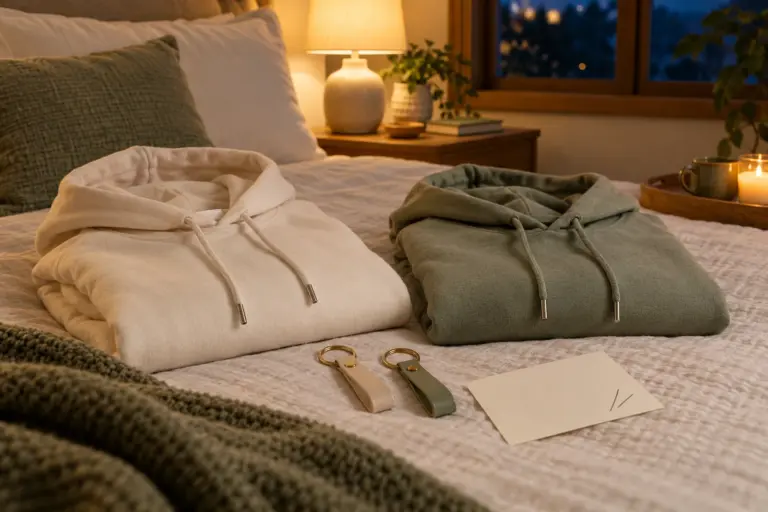
A gift tells someone you thought of them. A note tells them what you thought. That difference is why a short card can matter more than the object it travels with: the object says “I remembered you,” and the words say why, in your voice, in a way nobody else could have written.
Most people know this and still freeze when the blank card appears. They write “Happy birthday, love, Sam” and feel faintly disappointed in themselves. You do not need to be a writer. You only need to be specific. This guide gives you prompts, examples, a short drafting routine and a few traps to avoid, so you can write something that sounds like you on a day when the words will not come.
Why a few specific words beat a lot of general ones
General sentiments such as “you mean so much to me” are true, and they slide off the reader because they could have been written to anyone. A specific detail does the opposite. “You were the one who stayed to help carry boxes up three flights of stairs” could only be about one person, and it makes the reader feel seen.
That is all the secret there is. Choose one real thing and name it. The memory, the habit, the joke, the afternoon. Specific beats long every time, and it takes less time to write too.
Three prompts that nearly always work
When you are stuck, borrow one of these starters. Each takes a single sentence to complete, and you can combine two of them if you feel brave.
- A memory: “I thought of the summer we…”
- A reason: “I picked this because you always…”
- A wish: “I hope this makes your mornings a little better.”
How to finish a memory prompt
Think of a moment, not a period of time. “The summer we spent together” is vague; “the evening we ate peaches on the back steps and forgot to go inside” is a place the reader can step into. Pick a small scene with a sound or a taste in it.
How to finish a reason prompt
Look for a habit or a quality that connects directly to the gift. If you chose a mug because they cannot start a day without a second cup, say so. The reason shows the thought behind the choice, which is exactly what a gift note is for.
How to finish a wish prompt
A wish looks forward. Keep it small and warm: slower mornings, a bit more laughter at the end of a long week, a quiet corner of the house that feels like theirs. Avoid grand predictions about their life; a modest wish tends to feel more sincere.
Keep it short
Two or three sentences are plenty. A note that fits on the card without crowding looks confident, and it is far more likely to be read slowly and kept. Long notes tend to wander, and the best line often gets lost in the middle.
A good rule of thumb is to write your first draft freely, then cut it in half. What remains is usually the part you meant. If you are writing for someone you love very much, resist the urge to say everything on one card. You can always write again next year.
Wording that fits the occasion
The tone of a note should match the moment. Here are directions for the occasions that come up most often, written as starting points to adapt rather than lines to copy.
Birthdays
Name something you like about them this year, not a generic compliment. It could be how they handled a hard stretch, a new habit you admire or the way they have become funnier. A birthday note that notices change tells the person you have been paying attention, and that is rarer than a gift.
Thank-you gifts
Name the thing they did. “Thank you for staying late to help with the move” works better than “thank you for everything.” Say what it made possible, and stop there. A thank-you should feel like a handshake, not a speech.
Anniversaries and couples
Wander Patch Keychain is another design to consider for this gift idea.
New homes and fresh starts
Keep it light and forward-looking. A note about the first meal in the new kitchen or a wish for the first quiet evening is better than advice. If you are choosing a gift for the occasion, our guide to housewarming gifts that fit the new home has ideas that pair well with a short card.
Hard seasons
When someone is grieving or having a difficult time, shorter is kinder. Say you are thinking of them and leave out advice and silver linings. Our article on gentle gifts for remembrance talks about tone for quiet moments like these.
Say what is on the gift
If the gift carries names, a date or a short phrase, mention why you chose them. It turns a printed detail into a story the recipient can retell. A name on its own is just a name; a name with a sentence behind it becomes something people mention to their guests.
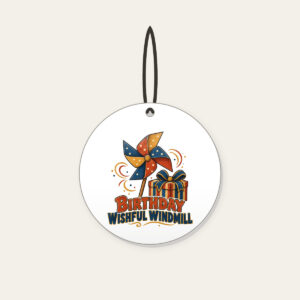
Birthday Wishful Windmill Ornament is another design to consider for this gift idea.
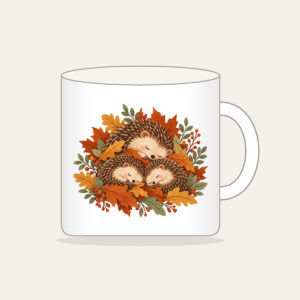
Sleeping Hedgehogs in Autumn Leaves Mug. A handful of hedgehogs have rolled into tidy spiky balls and dozed off beneath a scatter of fallen leaves. Brown, rust and sage drift together in a quiet autumn hush, with every sleeper tucked in close to its neighbor.
These gift ideas include made-to-order designs. Choosing finished artwork does not mean an item is in stock or ready for immediate delivery. Some selections use finished artwork; only choose custom text where the listing offers it. Check each product’s options and the shipping information before planning when to give it. The photographs illustrate gift-giving ideas; use each product’s listing to see its own design.
Birthday Wishful Windmill Ceramic Ornament
- Free gift
$19.95In stock
Sleeping Hedgehogs in Autumn Leaves Mug
- Free gift
$21.95In stock
Wander Patch Keychain
- Free gift
$16.95In stock

A five-minute drafting routine
If a blank card makes you tense up, a routine can take the pressure off. It works for notes of any size.
- List three things. Write three specific details about the person on scrap paper: a memory, a habit, a thing they said. Do not edit.
- Circle the one that makes you smile. That is nearly always the best one.
- Write it as if telling a friend. One or two sentences, no fancy words, as you would say it aloud.
- Add the connection to the gift. One short line linking the detail to what you chose.
- Read it aloud and cut. If a phrase sounds like something you would never say, replace it.
Then copy it onto the card in your own handwriting. Handwriting does not have to be beautiful. It only has to be yours.
Mistakes that quietly weaken a note
- Apologizing for the gift. “It’s only a small thing” undersells your own thought. If you chose it with care, say so.
- Explaining the joke. If a joke needs a paragraph to land, replace it with a simpler line.
- Crowding the card. Tiny handwriting jammed to the edges looks anxious. Leave white space.
- Copying a template word for word. Prompts are doorways, not scripts. Borrow the shape and swap in your own details.
- Forgetting the name. Begin with their name and end with yours. It sounds obvious until you are in a hurry.
Where the note goes
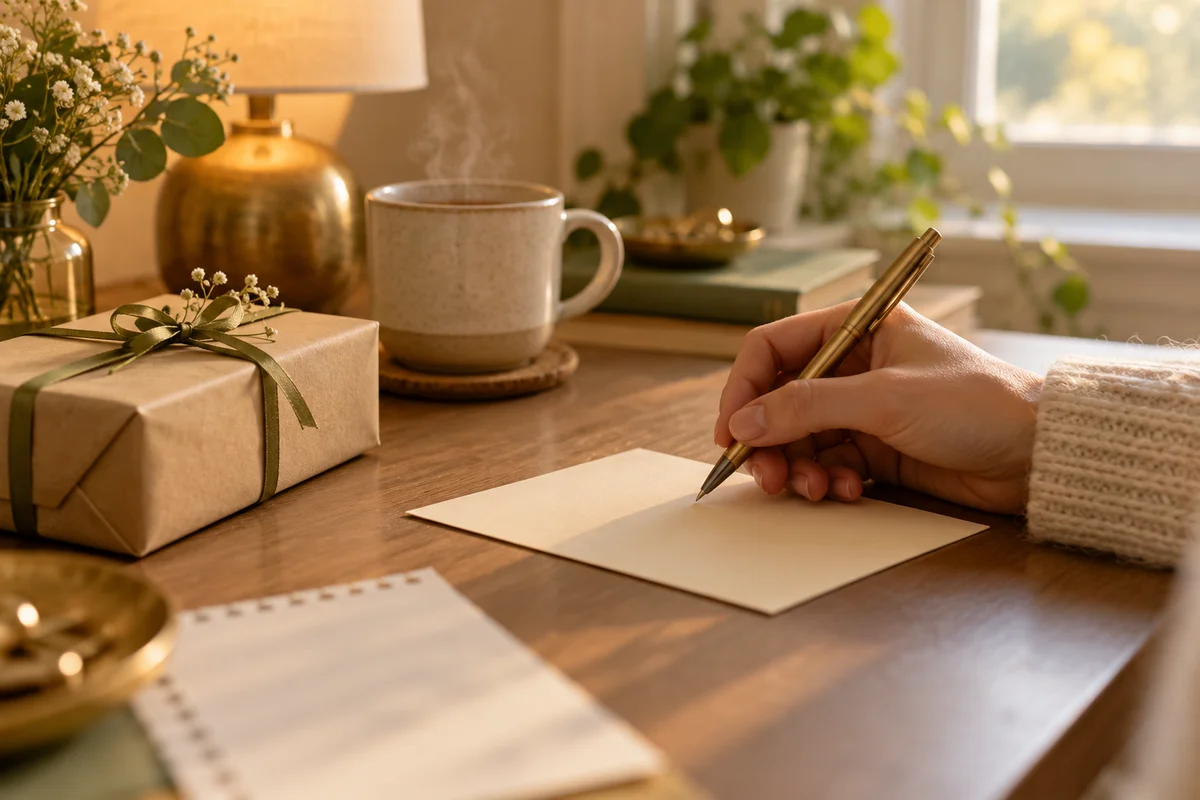
A note works best when it is easy to find. Tuck it under the ribbon, slide it into a small envelope tied to the gift, or write it on the tag itself if the message is short. If the gift is a surprise for later, add a line inside the wrapping so it is the first thing they see when the paper comes off. Our guide to wrapping it up covers simple ways to present a gift so the note and the gift reach the person in the same moment.
If your gift is traveling to someone far away, remember that how long it takes depends on where they live and on the carrier. Order early, leave plenty of time and check the shipping page. If you are still choosing, the gift guide can help you find something worth writing about.
FAQ
How long should a gift note be?
Two or three sentences are plenty. A short note that is specific will be read more carefully and kept longer than a long one.
What do I write if I am not good with words?
Use one of three prompts: a memory, a reason or a wish. Complete a single sentence with something true and specific, and add one line linking it to the gift.
Should I mention what is printed on a personalized gift?
Yes. If the gift carries names or a date, say why you chose them. It turns a printed detail into a story the person can retell.
Should the note be handwritten?
Handwriting is a lovely touch, and it does not have to be neat. If you cannot write by hand, a typed note signed with your name still works.