
Names are the most personal part of a personalized gift, and they are also where mistakes are easiest to make. When a name belongs to more than one language, or when the people reading the gift grew up reading different alphabets, a few extra questions are worth settling before you finalize the text.
None of them are hard. They mostly come down to asking the right person, copying rather than retyping, and giving the preview a patient look. This guide walks through the questions in the order they tend to come up, with examples of how families handle each one.
Ask which form of the name they use
Many people carry more than one version of their name. There may be a formal name on paperwork, a family name used at home and an easier form used at school or work. Someone may be Wei Ling to their grandparents, Wendy to their classmates and Ling to their closest friends, and all three are completely right.
The gift should carry the one that person would write down about themselves. If you are not sure, look at how they sign messages, how they introduce themselves to new people and what name appears on their own accounts. A short question, such as “Which spelling do you like to see written?” is almost always welcome, even for a surprise gift, because you can ask it as if you were filling in a guest list.
Names with a long or a short form
Some names have a short international form and a long traditional one. Choose with the object in mind: a short mug-sized message suits the short form, while a larger piece of wall art can carry the longer one. Our post on names that fit explains how print area affects the choice.
Confirm accents, apostrophes and spacing
Accents, apostrophes and hyphens carry meaning in many languages. A missing accent can change how a name is read, and a flattened apostrophe can make a name look unfamiliar to the people who own it. Ask for the spelling in writing rather than relying on memory, and copy it from a message the person wrote themselves.
Whether a product can show a particular character depends on the item and its personalization options, so check the product page. On our two-person mug, for example, letters such as é, ñ and ł print just fine, while emoji and some scripts cannot be printed yet, and the field says so before anything goes into your bag. If a character cannot be shown on the design you chose, ask the person which simpler spelling they would be happy to see, or look at another product.

Think about script and reading direction
Names written in a different script may not be supported by every product, and scripts that read right to left or top to bottom add one more thing to check. Read the options on the product page before you commit, and look carefully at how the preview lays the text out.
It helps to keep a plain-letter alternative in your back pocket. Many families already have a romanized spelling they use on forms and online accounts. If the original script cannot be used on the item you want, that spelling may be a graceful fallback, as long as the person is comfortable with it. If they are not, it is better to choose a design that supports what they want than to settle for something that feels wrong to them.
Decide whether to show one name or two
Some families like to include a name in two languages, one in each script or one in each spelling. Others prefer a single version for simplicity. Both choices are fine, and the right one depends on the person, the object and the amount of room.
- One version only. Best when space is tight or the person strongly prefers one form.
- Two versions, side by side. Lovely on larger pieces where there is room for both without crowding.
- One version, plus a short phrase in the other language. A way to honor both languages without doubling the number of names.
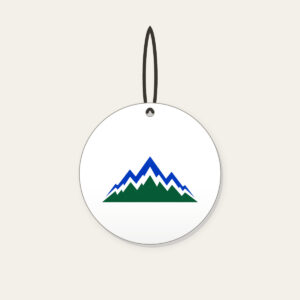
Cobalt Zigzag Mountain Peaks Ornament. Sharp zigzag peaks stack across the artwork in cobalt and crisp white, resting on a deep green base like pines at the foot of the range. The look is graphic, sporty and unmistakably alpine.
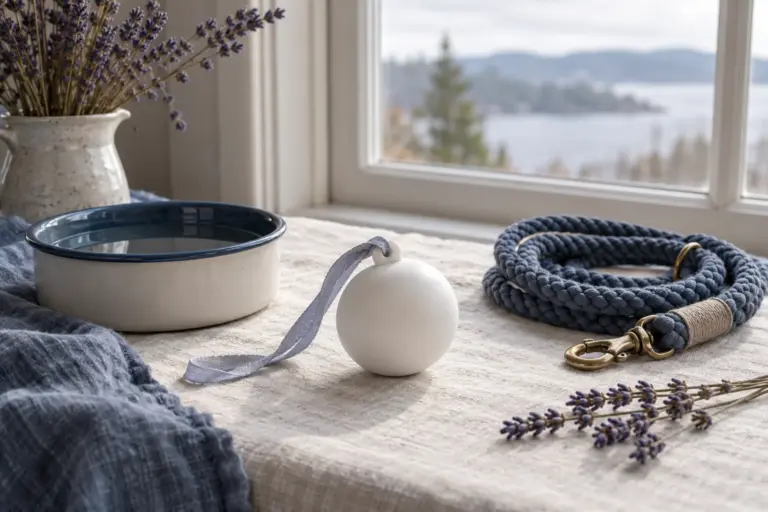
These gift ideas include made-to-order designs. Choosing finished artwork does not mean an item is in stock or ready for immediate delivery. Some selections use finished artwork; only choose custom text where the listing offers it. Check each product’s options and the shipping information before planning when to give it. The photographs illustrate gift-giving ideas; use each product’s listing to see its own design.
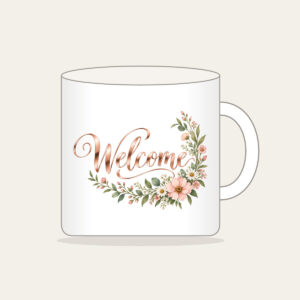
Rose Gold Welcome Wildflower Garland Mug
- Free gift
$21.95In stock
Cobalt Zigzag Mountain Peaks Ceramic Ornament
- Free gift
$19.95In stock
Proofread with someone who reads the language
If you cannot read the language yourself, ask a speaker to look at the text before you order. This is the single most useful step in the whole process. A fresh pair of eyes can catch a swapped letter or a wrong accent in seconds, while you could stare at the same characters for ten minutes and never notice.
Give your helper the exact text you plan to type, and ask them to read it back to you. Reading aloud reveals mistakes that silent reading hides. Then compare the preview with the text you gave them, character by character, rather than eyeballing the overall shape.

Respect the story behind the name
Names often carry family history: a grandparent honored, a village remembered, a meaning chosen on purpose. When you take care with a name, you are handling something that matters to the person, and a short note acknowledging that you checked the spelling can mean a lot. A line such as “I checked with your mom to make sure I had it right” is the kind of detail people remember.
It also helps to avoid translating a name unless you are asked to. A name is not the same as its meaning, and a translation can turn a person into a dictionary entry. Write the name as it is.
A family piece that holds more than one language
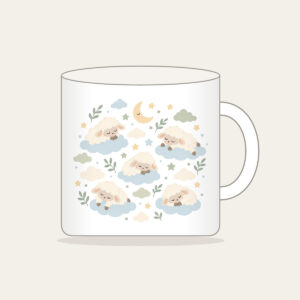
Sleepy Sheep and Clouds Mug. Small clouds and curled-up sheep share a light field in cream, pale blue and sage, each one dozing in its own quiet corner. The shapes are rounded and gentle, and they repeat at an unhurried pace. Nothing in the picture is awake, and that is exactly its charm.
For gifts that travel to another country, our guide to gifting someone in another country covers the wider picture, and the shipping page explains how delivery works.
Common mix-ups to watch for
A few patterns come up often enough to be worth naming. Knowing them makes it easier to spot a problem in the preview.
- Look-alike letters. Letters from different alphabets can look almost identical, and a copy-and-paste from the wrong source can bring in a character you did not intend.
- Dropped marks. An accent or a small hook can vanish when text is retyped on a keyboard that does not offer it.
- Swapped order. A family name and a given name can trade places when you move from one language to another.
- Spacing changes. Some names include a space or a hyphen that a form may handle differently from what you expect.
The preview is the place to see all of these. Read it slowly, and if anything looks different from your source text, correct it before you order.
A short checklist
- Confirm the exact spelling in writing, ideally copied from the person’s own message.
- Check which characters the product supports on its product page.
- Decide whether to show one name or two.
- Ask a reader of the language to proofread the text and the preview.
- Keep a copy of the final text to compare against the preview.
These checks catch most common errors. If something in the preview looks different from what you intended, correct it before you order. For more on the order of steps, see how to personalize, and for the wider picture read names, language and personalization worldwide.
FAQ
Can I put a name from a different alphabet on a gift?
It depends on the product. Check the options on the product page and the preview. If a script is not supported, the field says so before you add anything to your bag.
What if the product cannot show an accent in the name?
Ask the person which simpler spelling they would be happy with, or choose another design. Do not guess.
Should I put a name in two languages on one item?
Only if there is room. Two clear names with space between them look better than two crowded ones, and one version is often the best choice on small items.
Who should proofread the text?
Someone who reads the language, ideally a person close to the recipient. Give them the exact text and ask them to check the preview too.