

When someone you care about is unwell or having a hard stretch, wanting to do something is natural. So is feeling unsure about what. You do not want to say the wrong thing, you do not want to add to their load, and you want whatever you send to feel like warmth rather than an obligation. That uncertainty is common, and it is a sign you care.
This guide is about choosing a get well gift that comforts. It is not about the illness or anyone’s recovery, and nothing here is medical advice. It is simply about how to be kind in a way that is easy to receive. The main idea is small: the best gift asks nothing of the person, and says only that you are thinking of them.
Start with what the person will not have to do
When people are resting, even simple tasks can feel heavy. A gift that arrives with instructions, upkeep or a need to respond adds weight. The gentlest gifts are the ones that can be set down and enjoyed on the person’s own terms.
A useful test is to imagine the person on a slow, tired day. Could they use this gift without getting up, without sorting anything out and without writing a thank-you note? If the answer is yes, you are on the right track. If the gift needs setup or an answer, it may be better saved for later.
It also helps to keep the tone light. You do not need to match the seriousness of the situation. A cheerful, calm gift often does more good than a solemn one, because it offers a small lift without making a fuss.

Think in terms of comfort, not cure
It can be tempting to send something that suggests a remedy or a quick return to normal. Resist that. You are not in a position to promise anything, and the person may not want to be reminded of the situation at all. Aim for comfort instead: something that feels cozy, familiar or quietly cheerful.
- Something warm to hold: a mug is a natural companion for slow, quiet hours.
- Something soft to settle into: a blanket or pillow that makes a chair or bed feel kinder.
- Something small to look at: a keepsake or print that brings a touch of color to a room.
- Something that simply says hello: a thinking-of-you design that carries a message without needing a reply.
Notice that all of these live in the person’s space and ask nothing of them. That is the quality to look for across any gift you consider.
Gentle designs to consider
These made-to-order designs show what comfort without pressure can look like. Each one carries its words as part of the artwork.
The Get Well Gentle Days Mug is a watercolor of a comforting teal cup of lemon tea beside a small honey jar with no label and one chamomile bloom. The Get Well Soft Sunshine Fleece Blanket shows a gentle golden sun emerging from behind a small soft blue cloud over a sprig of coral flowers, in a retro style. Both lean toward warm, familiar images rather than anything clinical.
For something that simply says you are there, the Thinking of You Today Ornament uses bold plum and sage contours to draw a blank closed envelope sealed with a little heart beside a single lavender stem. The Thinking of You Always Pillow is a gouache painting of a single small blue bird perched on a coral flowering branch, holding a little gold heart in its beak.
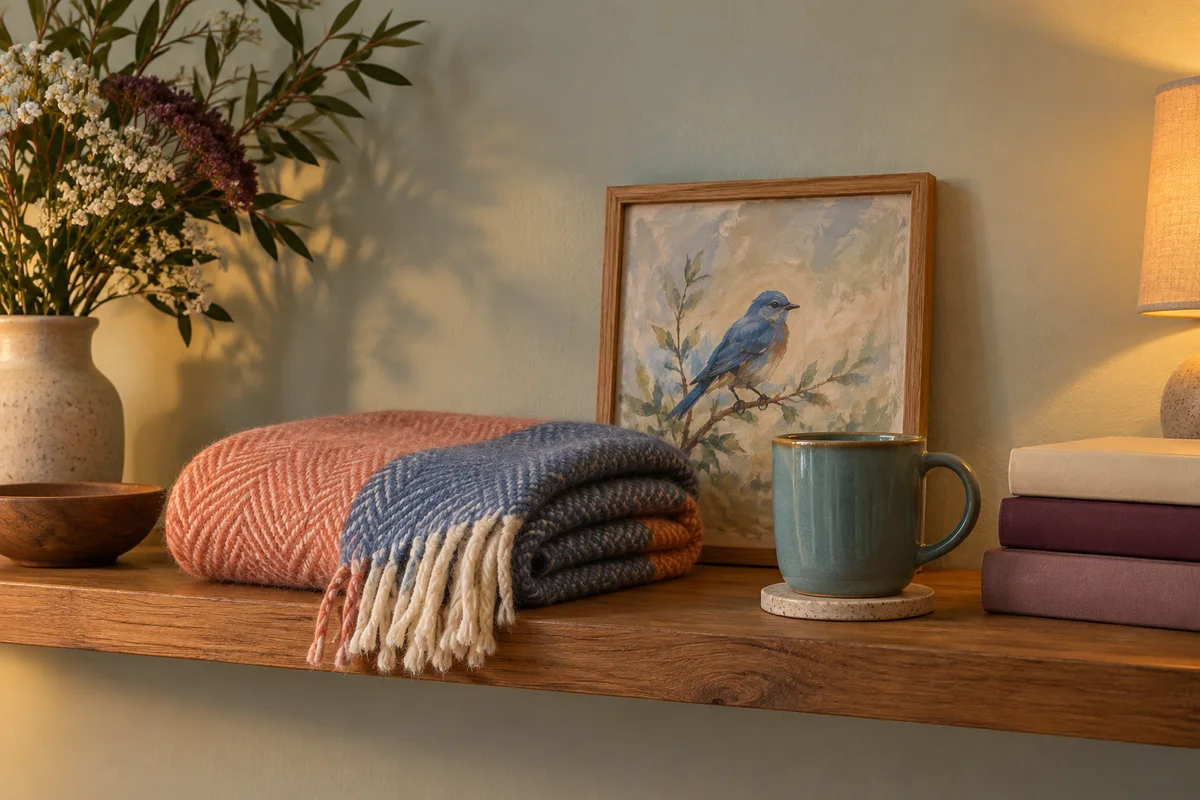
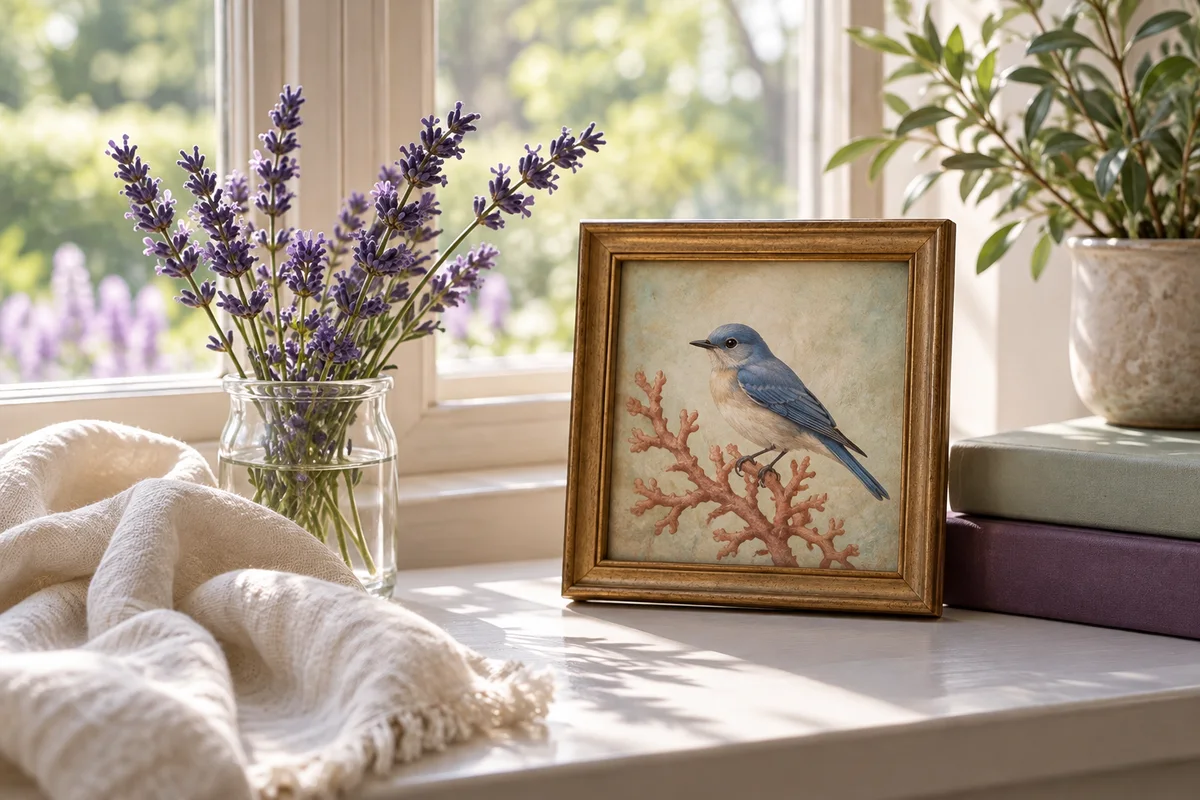
These gift ideas include made-to-order designs. Choosing finished artwork does not mean an item is in stock or ready for immediate delivery. Some selections use finished artwork; only choose custom text where the listing offers it. Check each product’s options and the shipping information before planning when to give it. The photographs illustrate gift-giving ideas; use each product’s listing to see its own design.
Get Well Gentle Days Mug
- Free gift
$21.95In stock
Get Well Soft Sunshine Fleece Blanket
- Free gift
$54.95In stock
Thinking of You Today Ceramic Ornament
- Free gift
$19.95In stock
Thinking of You Always Pillow
- Free gift
$34.95In stock


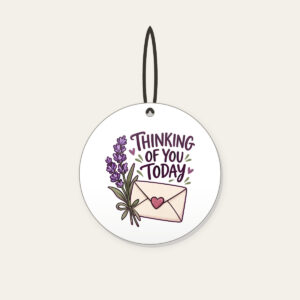
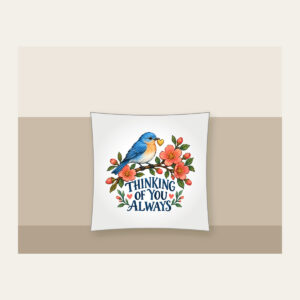
These are ready-made designs, and the lettering is part of each picture. Choose by the image and the feeling it gives. If you want to add your own words, the best place is the note that comes with the gift. Where a listing offers custom text, the page will say so.
Who the gift is from changes how it should feel
The right gesture also depends on your relationship. A close friend or family member can send something with a more personal feel, and can follow up with a call or a visit when the person is ready. A coworker or neighbor may do better with something simple and unassuming, and a short message that makes no demands.
If you are sending a gift from a group, such as a team or a street of neighbors, one warm piece with a shared note usually feels better than several separate items. It keeps the moment calm. The person receives a single kind gesture instead of a pile to sort through, and there is no pressure to thank each giver individually.
What to skip
Some well-meant gestures can accidentally make things harder. A few to avoid:
- Anything that assumes an outcome: phrases about being back on your feet soon can feel presumptuous if you do not know the situation.
- Gifts that give advice: leave suggestions about how to feel or what to do to the people who are close to the situation.
- Big or bulky items: a space may already be crowded with other things.
- Gifts that need an answer: a request for a reply turns kindness into a task.
- Heavy humor: light and warm usually lands better than a joke about the situation.
Writing a note that does not demand a reply
The note matters as much as the gift. The goal is to be warm and short, and to make it clear no answer is expected. Start with something simple and true.
- “I am thinking of you today. No need to reply.”
- “Sending you a little warmth. Rest as much as you like.”
- “I am here whenever you want company, and happy to wait until then.”
Keep it brief enough to be read in a moment. For more on wording, our guide to writing a note to go with a gift offers further starting points. And if the person is going through a longer difficult stretch, gifts for a friend going through a hard time may help.
A small habit that helps: ask a mutual friend
If you are unsure what the person would welcome, a quick word with someone close to them can save you from guessing. Ask only about taste and tone, such as whether they like bright colors, whether humor is welcome or whether quiet is preferred. You do not need the details of their situation, and you should not pry for them. A sentence or two of context is enough to choose well.
Timing and practical details
Because every design here is made to order, it will not arrive instantly, so check the shipping information before you plan. A gift that arrives a little after the hardest days can still be welcome, since support often matters most once the first flurry of attention has passed. If the person is somewhere that restricts deliveries, a quick message to a family member can help you choose the right address.
For more ideas, see our list of get well and thinking of you gifts and our get well ideas by budget. You can also browse blankets or use the gift finder.
FAQ
What is a good first gift when I do not know the situation well?
Choose something calm and universal, such as a mug or a soft blanket, with a short, kind note that asks for nothing.
Should I mention the illness in the card?
Only if the person has already spoken about it openly. Otherwise a simple thinking-of-you message is usually the safest and warmest choice.
Can I put my own message on the design?
The designs mentioned here are made-to-order artwork with the wording included. Where a listing offers custom text, the page will say so, and your own words can go on the note.
Is it too late to send something after the first few weeks?
Not at all. A gift that arrives later can feel especially kind, because support often fades before the need does.