
You ask what they would like, and the answer comes back warm, polite and final: “Nothing, really. Please don’t buy me anything.” If you have someone like this in your life, you already know that taking them at their word leaves you empty-handed on the day, and ignoring them feels like walking past a sign that says do not enter.
The trick is to treat “nothing” as information rather than as a rule. It rarely means the person is beyond wanting anything. It usually means they dislike clutter, they dread being a burden, or they simply cannot think of an answer on the spot. A good gift for this person answers all three worries at once, and the rest of this guide shows you how.
What “nothing” usually means
People give that answer for different reasons, and the reason tells you which direction to go. Listen to how it was said, not only to the words.
- “I don’t need more stuff.” This is the tidy-shelf person. They will welcome something that has a job to do and will resent something that only sits there.
- “Don’t spend money on me.” This is the person who feels awkward being fussed over. Keep the gift modest in size and low in drama.
- “I can’t think of anything.” This is the blank-mind answer. It is the easiest one to help, because you only need to notice what they already reach for.
- “I already bought what I wanted.” This person is practical and self-sufficient. A gift that adds a little ease to something they do daily will land better than a surprise.
Once you know which of these you are dealing with, the pressure drops. You are no longer guessing at a hidden wish list. You are looking for a small, useful thing that fits a life that is already full.

A useful test at this stage: would this person be glad to find the gift on an ordinary shelf in a month’s time, long after the occasion has passed? If the answer is yes, you are on the right track. If the answer is “only if they feel they have to,” keep looking.
Three quiet questions to ask yourself
Instead of asking them again, spend a week noticing. You can answer most of these without a single conversation.
What do they reach for first thing in the morning?
Watch the first ten minutes of their day. A mug of coffee, a glass of water, a pair of slippers by the door: those are the objects that get touched every day, so those are the objects a gift can replace or improve without adding to the pile.
What do they mention missing when they travel?
People rarely say “I miss my sofa,” but they say “I can’t wait for my own cup of tea.” The small comforts they name after a trip are the ones worth building a gift around.
What has been in their space for years, looking tired?
Almost everyone has one object that has outlasted its welcome: a chipped cup, a worn-out key ring, a candle stub. A kind replacement for something they would never replace themselves is a gift they did not know they wanted.
Choose use over display
For the person who avoids clutter, the rule is simple: a gift that earns its place gets kept, and a gift that only decorates gets moved to a closet. Think about the Sunday-evening candle, the default morning cup, the thing that turns a routine into a small ritual.
Personalization helps with exactly this. A name or a short phrase turns a generic object into something clearly theirs, which makes it harder to drop into a donation bag and easier to leave in plain sight. Our mugs are a natural starting point, because almost everyone drinks something and a cup that is theirs gets picked up on purpose.

Keep the personal touch light
With a reluctant receiver, one small detail is plenty. A crowded design with three jokes, two names and a date feels like a speech. A single first name, a pair of initials or a short phrase feels like a nod across the room.
If you are not sure about a slogan, do not gamble. Choose a plain name or initials and let the object itself carry the thought. Options differ from item to item, so check each product page for what can be personalized before you commit, and look at the preview to see how the design will sit on the object.
The same restraint applies to the gift size. A box that is too big can read as pressure, because it invites a big reaction. A small object that fits in one hand says: no occasion, no scene, just a thought.
Four pieces worth considering
These are not the only options, but each suits a different kind of “nothing.”
For the self-described low-key dad
Dawn Gradient Half Heart Mug. A heart shape appears as a left half only, filled with a dawn gradient that moves from peach through rose to a gentle violet. A thin cream border outlines it, leaving the missing half to the imagination.
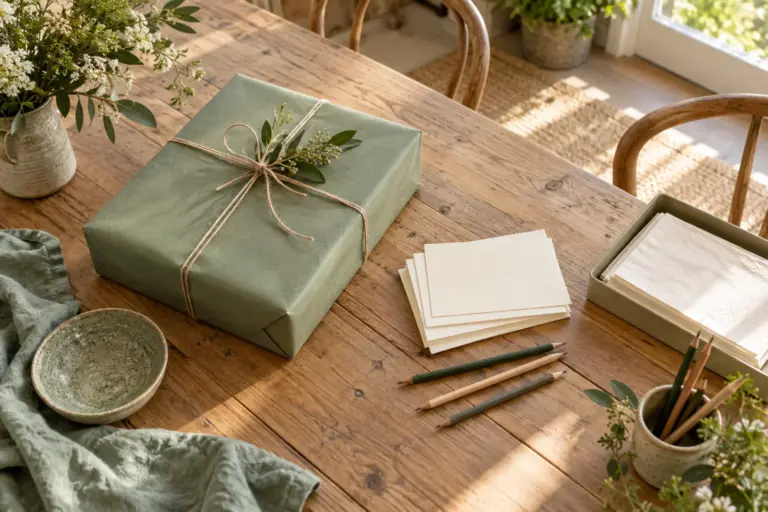
These gift ideas include made-to-order designs. Choosing finished artwork does not mean an item is in stock or ready for immediate delivery. Some selections use finished artwork; only choose custom text where the listing offers it. Check each product’s options and the shipping information before planning when to give it. The photographs illustrate gift-giving ideas; use each product’s listing to see its own design.
Dawn Gradient Half Heart Mug
- Free gift
$21.95In stock
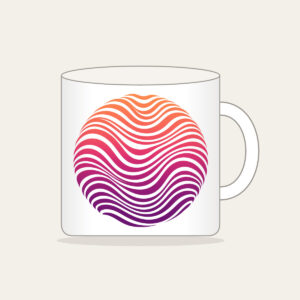
Sunset Ripples from Coral to Plum Mug
- Free gift
$21.95In stock

For the person who never treats themselves
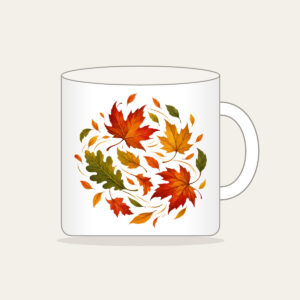
Drifting Autumn Leaves Mug. Leaves tumble across the artwork in rust, gold and green, each at its own angle, as if a gust had just lifted them from the ground. The movement is gentle and the colors are warm and unhurried, a quiet reminder of crunchy paths, early sunsets and long, slow walks through the woods.
For the sentimental minimalist
If this person has a handful of tickets, letters and small treasures floating around the house, a home for them is a better gift than another object. Browse the keepsakes to see what gives small things one tidy place to live.
For the quiet one who likes a plain, finished thing
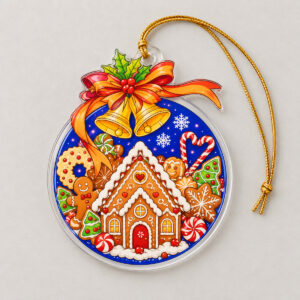
Cutout Gingerbread Cottage Ornament is another design to consider for this gift idea.
Add a note, not an obligation
Whatever you choose, include a short handwritten line explaining why you thought of them. Something like “This made me think of your Sunday mornings” gives the gift a reason and takes away any pressure to reciprocate or to perform delight.
It also helps to say, in so many words, that no thank-you is needed. People who insist they want nothing often feel they owe something back, and a line such as “no reply required, just enjoy it” closes that loop before it opens. If you want ideas for the wording, our guide to writing a note to go with it has a few starting points that stay short and warm.
When you are still stuck, ask someone close
If you cannot find an angle, a partner, sibling or close friend of the receiver can usually fill the gap in one sentence. Ask what they have been using lately or complaining about quietly, and build the gift around that.
You can also let the occasion help. A person who wants nothing for a birthday may still enjoy a small thing at a time that is not a birthday, because there is no scoreboard and no expectation. If that sounds like your person, read about just-because gifts and consider moving the gesture off the calendar altogether.
And if you want to browse by person or by occasion, the gift guide sorts ideas so that a shrug turns into a short list in a few minutes.
FAQ
Should I respect it when someone says they want nothing?
Yes, but read it as “nothing big, nothing messy.” A small, useful gift with a light personal touch respects that wish, while skipping the gesture entirely can feel colder than they intended.
Is a personalized gift too much for someone who dislikes fuss?
Not if you keep it light. One name or one short phrase on an object they will use is quiet and thoughtful, while a crowded design with many details is more likely to feel like attention they did not ask for.
What if I cannot find out what they use every day?
Pick a ready-made, useful item such as a candle or a mug, and add a short note. Consumable and everyday objects are easy to enjoy and easy to pass along if they turn out not to fit.
How do I keep the gift from feeling like an obligation?
Say so in the note. A line telling them no reply is needed, and that they are free to keep it, use it or pass it on, takes the pressure off before it starts.