

The house is different when a dog is gone. There is no sound of claws on the floor, no face at the kitchen door, no sense that someone is waiting for you. People who have not lived through it sometimes underestimate how much space one animal takes up in a life, and how much that space aches when it is empty.
If you want to give something to a person in that situation, you are trying to do a delicate thing: acknowledge the loss without making it bigger, and offer something small that says the dog mattered. This guide is about how to do that with a personalized keepsake, and just as much about what to leave unsaid.
Start by listening, not shopping
Before you choose anything, think about what the person has actually said. Some owners talk about their dog constantly after a loss and want the name spoken aloud. Others retreat and find any mention overwhelming. A gift is not the first move in either case; a short, sincere message is.
Something like “I have been thinking about Maple and about you” is better than any gift sent without a word. It tells the person that the dog is remembered by name, which is what most grieving owners want more than anything. The keepsake can come later, with a note, once you have a sense of how they are doing.
What not to say
- “At least she had a good life.” It may be true, but it asks the person to feel better when they are not ready.
- “You can always get another one.” A dog is not replaceable, and this phrase says it is.
- Anything that explains the loss. Theories about why, or promises about what comes next, are not yours to offer.
- Anything that promises a particular emotional result. A gift cannot fix grief, and you should not claim that it will.
What works instead is plain: name the dog, say you are sorry, and mention one memory if you have one. “I will never forget how he guarded the porch steps” is worth more than a paragraph of general comfort.
Choosing a keepsake that fits the person
Memorial gifts divide roughly into two kinds: things that live out on display and things that live quietly in a drawer or on a tree. Neither is better. The difference is how visible the person wants their grief to be.
For the person who wants something to look at
A wall piece can sit in the living room and keep the dog present in the house without anyone needing to explain it. The Rainbow Bridge Pet Memorial Canvas is made for this situation. Read the product page to see which details can be personalized, such as the name, and decide whether the style matches how the person would want to remember their dog. Some people will love the tone; others may prefer something plainer, and that is entirely fine.

For the person who wants something small and private
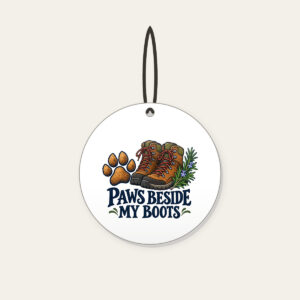
Paws Beside My Boots Ornament is another design to consider for this gift idea. For related guidance, see memorial ornaments for the holidays.
For the person who is not ready
Some people cannot look at anything with the dog’s name on it yet. A gift that is not about the dog at all can still be kind: something warm for the evenings, a note that says you are around when they want company. You can offer the memorial gift later, once they have started talking about the dog again.
Wording a memorial gift
The words on a keepsake should be few and steady. A name, a year, maybe a short line. Grief is not the moment for clever.
- The name alone. Often the strongest option. It does not explain; it simply holds the place.
- The name and the years. Birth and loss, or just the year they joined the family, depending on what the product accepts.
- The name they used at home. If the dog was officially one thing and called another, choose the home name.
- A short, plain phrase. “Always our good boy” or “Loved every day” sits comfortably. Avoid anything grand, and avoid anything that tells the owner how to feel.
Check the spelling with someone close, because nicknames get abbreviated in conversation. And read the options on the product page before you settle on a line, so you know what the item can carry. Our personalization guide explains the ordering steps if you want to see them in order.
Timing and tone
There is no single right moment. Some people welcome a gift in the first hard stretch, when the house feels empty. Others are touched more by a keepsake that arrives later, when the world has moved on and the dog is no longer mentioned. If you are unsure, a note now and a gift later is a reasonable approach.
The same goes for anniversaries. A small gesture on the date the dog was lost, or on their birthday, tells the person that you have not forgotten. It does not have to be a purchase. A message is enough. When you do send a keepsake, add a handwritten card; for ideas on gentle wording, our guide to sympathy gifts that say “I remember” offers more.
For delivery questions, please use the shipping page instead of relying on guesses, and plan ahead so the gift does not feel rushed.
If the person has other pets, or children
A household often grieves together, and children may need something concrete. A name on an ornament that the whole family hangs together each year can become a small ritual. If other animals are still in the house, you might think about something for them too; our post on pet portrait gift ideas for dog people shows how personalized gifts can celebrate a living dog, which is a different tone, but a useful reminder that the household still has love to give.
Small rituals that keep a name in the room
A keepsake is only part of remembering. Many owners find comfort in a few small habits that make the dog’s name feel at home rather than hidden away. You might mention some of these in your note, not as instructions, only as possibilities.
- A yearly place on the tree. An ornament that comes out every December turns grief into something that has a shape and a season.
- A favorite spot. Leaving the dog’s usual corner of the sofa or the porch a little untouched can feel kind, and a small framed piece nearby gives the spot a quiet anchor.
- A story at the table. Some families make a habit of telling one dog story at gatherings. A gift that carries the name makes that easy to start.

None of this needs to be named in the gift itself. The point is simply that a memorial piece works best when it fits into the way the person already lives, and a good giver leaves room for them to decide how it will be used.
A short checklist before you order
- Send a message that names the dog, before or alongside the gift.
- Choose an item that matches the person’s way of grieving: visible or private.
- Keep any wording short and plain; avoid promises or explanations.
- Confirm the dog’s name and the year with someone close.
- Read the product page options so you know exactly what can be personalized.
These gift ideas include made-to-order designs. Choosing finished artwork does not mean an item is in stock or ready for immediate delivery. Some selections use finished artwork; only choose custom text where the listing offers it. Check each product’s options and the shipping information before planning when to give it. The photographs illustrate gift-giving ideas; use each product’s listing to see its own design.
Rainbow Bridge Pet Memorial Canvas
- Free gift
From $42.95In stock
Paws Beside My Boots Ceramic Ornament
- Free gift
$19.95In stock

For more ways to think about remembrance, browse the ornaments collection and the canvas collection, and take your time. Nothing about this has to be quick.
FAQ
Is it appropriate to send a memorial gift to someone who lost a dog?
For most people it is a kind gesture, especially if it comes with a note that names the dog. If you are unsure how the person is coping, send a message first and let their reply guide you.
What should I write on a memorial keepsake?
Keep it simple: the dog’s name, perhaps a year, and at most a short line. Check the spelling with someone close and read the product page to see what the item can carry.
Should I avoid religious wording?
Unless you know the person’s beliefs well, choose wording that does not depend on any particular faith. Plain, personal words about the dog are almost always safer and often more moving.
Can I send a gift to a friend’s child who lost a family dog?
Yes, but include the parents in the choice. A small keepsake with the dog’s name can be a comfort to a child, and a short card in simple language usually means the most.