
When someone you care about loses a person they love, you want to do something. The impulse is good, but it is easy to turn it into something that does not help: a stock phrase, a gift that is too cheerful, a visit that lasts too long. The challenge is to offer comfort without asking the grieving person to manage your feelings on top of their own.
This guide takes a different approach from a standard list of sympathy gifts. It starts with what a grieving person tends to need, then shows how a few simple gifts can meet those needs. The theme running through it is the phrase “I remember”, because the most meaningful thing you can tell someone is that their person is not forgotten.
What most people need after a loss
Every loss is different, but several needs show up again and again. Understanding them makes it easier to pick a gift that fits.
- Warmth and rest. Grief is physically tiring. People forget to eat, sleep badly and feel cold even in a warm room.
- Permission to be quiet. Not every evening has to include a conversation. Small objects that invite stillness are welcome.
- Recognition. The person who died mattered, and the people left behind want that said, without having to ask.
- Low demands. A gift that comes with no deadline, no instructions and no expectation of a thank-you note is a gift that actually helps.
You can think of these as three ways of showing up: something to hold, something to warm, something to remember. The gifts below follow that pattern.

Something to warm: a throw for long evenings
Unrolling Fiddlehead Fern Fleece Blanket. One fiddlehead fern uncurls from its tight spiral, drawn in clean cream lines with delicate frond details. There is a lot of empty space around it, so the artwork feels peaceful and deliberate, a small symbol of growth in the stillness of a forest morning. For related guidance, see blankets collection.
Pair it with a short, unforced note. “I thought you might want something warm” does the job. Resist the urge to explain how it will help.
Something to hold the quiet: a candle
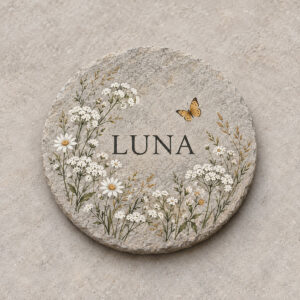
Quiet Meadow Memorial Stone is another design to consider for this gift idea.
Something to remember: an ornament or keepsake
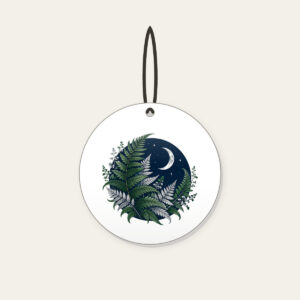
Moonlit Fern Fronds on Navy Ornament. Deep green fronds edged in silver unfurl across a navy night, with a small crescent moon floating above. It feels like a forest at midnight, quiet and faintly magical, where every leaf catches a little light and the silence feels almost musical, like a lullaby played for the woods themselves. For related guidance, see memorial ornaments for the holidays.
Timing matters more than the object
The most common mistake is to treat sympathy as a single moment. The first days after a loss are crowded with flowers, food and phone calls. A few months later, the crowd has gone home and the quiet has settled in. That is often when a thoughtful gift matters most.
- In the first moments: a short message is enough. A gift can wait.
- After the funeral or service: food and practical help are valued more than objects.
- Some time later: a gift that comes once the visitors have stopped tells the person you are still paying attention.
- On a hard date: a birthday, an anniversary or the first holiday season without their person. A small note or gift on those days says “I remember” in the clearest way possible.
If you plan to order something, check the shipping page for timing, and read the product options before you commit, so a late gift does not add to anyone’s stress.

Words that help and words that do not
A gift is only part of the message. What you write with it matters just as much. Here is a quick guide.
Words that tend to help
- “I am thinking of you.”
- “I remember when he…” followed by a real memory.
- “You do not have to reply.”
- “I will check in again soon.”
Words that tend to hurt
- “At least…” in any sentence.
- “They are in a better place.” Unless you know the family shares that belief, leave it out.
- “I know how you feel.” You may not, and the person may not want to be compared.
- “Let me know if you need anything.” It puts the work on the grieving person. Offer something specific instead.
If you cannot find the right words, write fewer of them. One honest sentence is better than a paragraph of cliches.
Making a real offer alongside the gift
The best sympathy gifts come with something practical. The object is a symbol, and the offer is a promise. Examples that work:
- “I can bring dinner on Thursday, and I will leave it on the porch.”
- “I am free on Saturday morning to run errands.”
- “Would it help if I walked the dog this week?”
- “I will call you on the fifth, and you can ignore it if you like.”
Then do it. Follow-through is what people remember.
These gift ideas include made-to-order designs. Choosing finished artwork does not mean an item is in stock or ready for immediate delivery. Some selections use finished artwork; only choose custom text where the listing offers it. Check each product’s options and the shipping information before planning when to give it. The photographs illustrate gift-giving ideas; use each product’s listing to see its own design.
Moonlit Fern Fronds on Navy Ceramic Ornament
- Free gift
$19.95In stock
Quiet Meadow Memorial Stone
- Free gift
$24.95In stock
Unrolling Fiddlehead Fern Fleece Blanket
- Free gift
$54.95In stock

Practical gifts that sit beside the sentimental ones
Not every sympathy gift needs to be a keepsake. Often the most useful thing is something that makes an ordinary day a little easier. Think of these as companions to a throw, a candle or an ornament, and give one or two together rather than a crowd of them.
- A meal, or a promise of one. Food is the oldest form of sympathy, and it still works. If you cannot cook, offer to order something on a day that suits them.
- A bundle of tea and something to eat with it. People who are grieving often stop looking after themselves. A small, easy ritual helps.
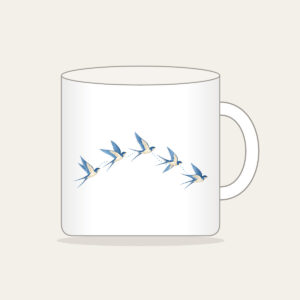
- Five Swallows in a Gentle Arc Mug. Five swallows fly in a gentle arc, drawn in cream and sky blue, with a fine dotted trail showing the path they have already crossed. The wings are light and the spacing is open, which gives the motif a hopeful, forward-looking feeling.
- A handwritten card with a memory. If you knew the person who died, write down one specific thing you remember. Families often keep these cards for years.

Checking in afterward
A gift opens a door. Whether it leads anywhere depends on what you do next. A few weeks after you give something, send a short message that asks nothing: “Thinking of you tonight.” Then do it again at the next hard date. You do not need to mention the gift, and you should not expect a reply. Quiet, repeated attention is what makes a person feel remembered, and it costs you only a minute. If the person does reply, listen first. Many people who grieve are relieved to speak the name of the one they lost, because everyone else has stopped.
A note on pets and other losses
People grieve pets, estranged relatives, friends who were more family than their families and relationships that did not end in death. Do not rank the loss. If someone is hurting, a gentle gift is appropriate. For a lost pet, see our thoughts on pet memorial gifts for the dog you miss. For another way to keep a name close over time, keeping a loved one’s name close is a useful companion read, and our gift guide has broader ideas.
FAQ
Is it appropriate to send a gift instead of attending a service?
If you cannot attend, a short note and a thoughtful gift are welcome. Keep the message simple and do not explain at length why you could not be there.
Should a sympathy gift be personalized?
Only if you know the family and are confident about the name and spelling. A ready-made gift like a throw or a candle is safer when you are not sure.
What if I did not know the person who died?
That is fine. You can still say “I am so sorry for your loss, and I am thinking of you.” The gift is for the living person, not for the memory of the one who died.
When is it too late to send something?
It is almost never too late. A gift that comes after the first rush is often more appreciated, because by then the person is often feeling alone.