

Giving a gift to someone whose faith is central to their life carries a small extra weight. You want the gift to feel warm and sincere, but you also want to be careful: not to assume, not to presume and not to stumble into a symbol or phrase that means something different to them than it does to you.
This guide is written for exactly that situation. It does not favor any tradition, and it will not tell you what any faith teaches. Instead, it offers a way of thinking about gifts for people of faith: how to respect what matters to them, how to choose quiet and useful things, and how to write words that carry care without borrowing language that is not yours.
Start by listening, not by choosing
The most respectful first step costs nothing. Notice how the person talks about their faith, and how much of it they share. Some people wear it openly and love it when others acknowledge it. Others hold it close and prefer a gift that honors the person rather than the practice.
- How open are they? Public, private or somewhere in between.
- What is the occasion? A celebration, a hard season, a thank-you or a milestone.
- What have they said they like? Often a person has told you something small without realizing it.
- Who else is involved? A family may share a faith, or may include people who do not.
When in doubt, ask someone close to them, or choose a gift that is gentle and universal. A kind gift never offends.
Gifts that honor the person, not a doctrine
A very safe and often very welcome approach is to give something that honors the person’s character rather than the details of belief. Think about what they do: they host, they volunteer, they sit with friends who are struggling, they show up. A gift that thanks them for those things is rarely wrong.
Housewarming Cozy Corners Mug. HOUSEWARMING COZY CORNERS Mug features line-art artwork showing an armchair beside a small floor lamp and one leafy pot on a little oval rug, bold dark plum contours. The lettering reads “HOUSEWARMING COZY CORNERS”.

A quiet candle for a quiet moment
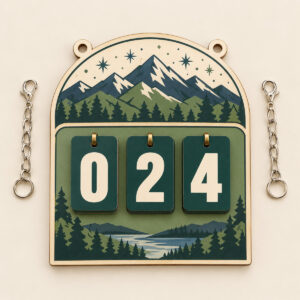
Reading Mountain Bookshelf Tracker Sign is another design to consider for this gift idea.
As with any scented gift, ask yourself whether the person enjoys fragrance, and whether their home is one where an open flame is welcome. A candle in a household with young children or a person sensitive to smoke is not the kindest choice.
Remembrance: when the gift is for someone who is grieving
Some of the most meaningful gifts for people of faith are given during loss. This is also where the greatest care is needed. People grieve in different ways, and many find comfort in their faith while also feeling very raw. The gift should offer company, not answers.
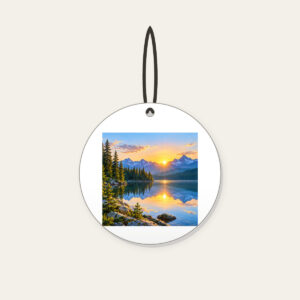
Quiet Lake at Sunrise with Pines Ornament. Pale light spreads over a motionless lake while dark pines line the far shore. The scene is edged by a thin white border, like a keepsake photograph, and the stillness is the whole point: no wind, no crowd, only the first light. For related guidance, see memorial ornaments for the holidays.
Avoid phrases that promise comfort or explain the loss. Even well-meant lines can feel heavy. A short, honest note is better: that you are thinking of them, that you remember the person by name and that you are here.

What to write
Words are where a faith-sensitive gift can go wrong, and also where it can shine. The rule that serves almost everyone is to speak in your own voice. Do not borrow scriptures, prayers or phrases that belong to a tradition unless you share it and know the person welcomes them.
- Say what you see. “I admire the way you show up for people.”
- Say what you feel. “I am grateful for you.”
- Say what you wish. “I hope the coming season is gentle.”
- Say what you remember. “I still think of how kind she was to me.”
If you do share the person’s faith and know a phrase that matters to them, use it with care and keep it short. If you are unsure, plain words are almost always better than the wrong ones.
Occasions where a thoughtful gift fits
A new home
A housewarming is a time of blessing for many families. A plain, useful gift with a warm note respects the occasion without requiring you to choose symbols. A mug and a candle work well together.
A thank-you to a community leader
People who guide others, whether in a congregation, a school or a volunteer group, are rarely thanked in person. A small gift and a note that names a specific kindness mean a great deal. Keep the gift modest, so it reads as gratitude, not a payment.
A season of illness or difficulty
When someone is struggling, resist the urge to say it will be fine. A quiet gift that offers comfort, such as something to sip and a note saying you are thinking of them, is enough. The home decorations has several items that suit this kind of visit.
A quiet anniversary
Remembering a date, such as the day someone joined the family or the day someone passed, is a form of care. A small keepsake and a short note do the work.

When the faith is not yours
It is perfectly possible to give a lovely gift to someone whose beliefs differ from your own. The key is humility. Do not try to translate their tradition into yours, and do not guess. Choose something that celebrates the person and their moment, and let the wording stay general: thank you, congratulations, thinking of you.
If you want to learn more about what a person would value, the most respectful way is to ask. People generally appreciate the question more than a perfect guess.
On timing and tone
The best moment to give is often quieter than you think. A gift handed over in private, at the end of a visit, lets the person receive it without an audience. Large public presentations can feel like a performance, and people of faith often prefer to receive kindness without ceremony. If the occasion is communal, such as a celebration among many guests, a small gift with a short card is still a better choice than a long speech. Let the person set the tone, and follow it.
It is also fine to give later than the event. A note that arrives after the crowd has gone home can feel more sincere than one that arrives in the middle of it.
Practical points before you order
- Read the product page. It states exactly what can be personalized, so you know what you can and cannot add.
- Check spelling. Names carry special weight, particularly in a memorial. Confirm them with someone close.
- Keep the wording short. A few words, said well, are better than many.
- Skip the symbols you are unsure of. If you are not certain what an image means to a person, leave it out.
These gift ideas include made-to-order designs. Choosing finished artwork does not mean an item is in stock or ready for immediate delivery. Some selections use finished artwork; only choose custom text where the listing offers it. Check each product’s options and the shipping information before planning when to give it. The photographs illustrate gift-giving ideas; use each product’s listing to see its own design.
Quiet Lake at Sunrise with Pines Ceramic Ornament
- Free gift
$19.95In stock
Housewarming Cozy Corners Mug
- Free gift
$21.95In stock
Reading Mountain Bookshelf Tracker Sign
- Free gift
$24.95In stock

If you are new to ordering personalized items, our how to personalize guide covers the steps, and the gift guide offers more themes to explore. For a related occasion, our piece on baptism and milestone gifts for the faithful looks at celebrations rather than loss.
A simple way to decide
- Listen for what the person has told you about their life and values.
- Choose a gift that honors them, not a doctrine.
- Write in your own voice, and keep it short.
- Confirm names and spelling before you order.
- Leave out any symbol or phrase you are not sure about.
FAQ
Is it safe to give a gift with no religious symbols?
Yes. A thoughtful gift without symbols honors the person and avoids the risk of getting a detail wrong. It is often the most welcome choice.
What should I write in a card for someone grieving?
Use your own plain words. Say you are thinking of them, mention the person by name and offer company rather than explanations.
Can I personalize these gifts?
The ready-made items here have no names to add. For personalized pieces, the product page lists exactly what the item can carry.
What if I am not sure what the person believes?
Choose something general, like a plain mug or a card of thanks. When you can, ask someone close to them for advice.