Imagine writing a sentence on a postage stamp. You would not try to say everything. You would pick the one thing that matters, choose the shortest honest way to say it and leave the rest to the rest of the letter. That is exactly the skill a small print area asks for, and it is a lovely one to practice.
Ornaments, keychains, small keepsakes and even a mug have limited space. Our designs use a fixed text size instead of shrinking your words to squeeze them in, which means a line that is too long is flagged before you can add the item to your bag. That might feel like a constraint, but it is really a favor: it pushes you toward words that read clearly at a glance.
Why short phrases work better than long ones
Long phrases fail for a simple reason. On a small object, each word has to be small, and small words are hard to read at arm’s length. A short phrase can be larger, bolder and easier to take in. It also sits more comfortably on the piece, with room around it that makes it look intentional.
Short phrases also age better. A single clear idea stays true for years, while a long line often references a moment or a joke that fades. The best phrases for small objects are the ones the receiver would still smile at in a decade.
The two-to-four-word formula
When you are not sure where to begin, use this formula: a small label plus a small truth.
- The label is who or what the line is about: a name, a role, a relationship or a place.
- The truth is one word or short phrase that says something real about it: a feeling, a habit or a date.
Put them together in two to four words and stop.
Here are some examples of the shape. “Mom’s Little Crew.” “Nana’s Kitchen.” “Our First Home.” “Sam and Alex.” “Always Together.” Each one has a clear subject and a small truth. None of them explains itself, and none needs to.
If your first draft has more than four words, treat that as a prompt to edit, not to squeeze. Remove adjectives first, then repeated ideas, then anything the receiver already knows.
Sample phrases by receiver
Use these as starting points, then adapt them to the person.
For a parent or grandparent
- Best Mom Ever, or a name plus “Mom”
- Papa’s Fishing Crew
- Our Favorite Nana
- World’s Okayest Dad, for a dad with a sense of humor
For a partner or couple
- Just the Two of Us
- Home Is You
- Our First Year
- Initials with a date
For a friend or sibling
- Besties
- Sisters by Heart
- Same Table, Same Cup
- A small inside joke, shortened to one word
For a teacher, nurse or colleague
- Teacher Fuel
- Nurse Life
- Thank You, Ms. and a name
- Running on Coffee, for a team that always is
For a baby or a pet
- A name plus a year
- First Christmas
- Good Boy, followed by the dog’s name
- Little Bear
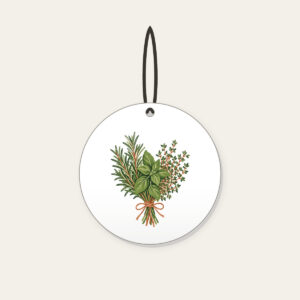
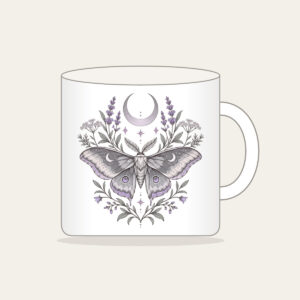
Moth and Crescent Moon with Herb Sprigs Mug. A delicate moth drifts beneath a slender crescent moon, with fine herb sprigs curling around the scene in silver grey and pale lilac. The artwork has the hush of a moonlit garden where the only sound is leaves. Herb Bundle with String Ornament. Sprigs of rosemary, basil and thyme are tied together with a length of string, drawn in green, cream and terracotta. The bundle looks freshly picked, with leaves of different shapes crossing each other. It smells of the kitchen even though it is only an illustration.
These gift ideas include made-to-order designs. Choosing finished artwork does not mean an item is in stock or ready for immediate delivery. Some selections use finished artwork; only choose custom text where the listing offers it. Check each product’s options and the shipping information before planning when to give it. The photographs illustrate gift-giving ideas; use each product’s listing to see its own design.
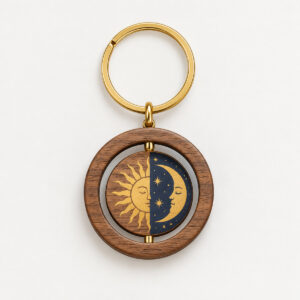
Sun and Moon Spinning Wood Keychain
- Free gift
$16.95In stock
Herb Bundle with String Ceramic Ornament
- Free gift
$19.95In stock
Moth and Crescent Moon with Herb Sprigs Mug
- Free gift
$21.95In stock
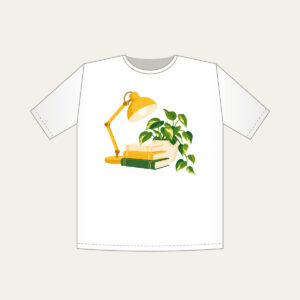
Lamplit Desk with Books and Fern T-Shirt
- Free gift
$24.95In stock
Trimming a long line, step by step
Most of us start too long. That is normal. The skill is in the trimming, and it follows a simple routine.
- Say the whole thing out loud. Notice which part you would actually say to the person’s face.
- Underline the one word that carries the feeling. That is the core of the line.
- Remove everything that explains. If the receiver already knows why, you do not have to say it.
- Replace phrases with words. “The best mom in the whole world” becomes “Best Mom.”
- Read it aloud again. If it still sounds like you, you are done.
Here is a before-and-after to show the idea.
- Before: “To the most wonderful grandma who always makes us feel loved and welcome in her home.”
- After: “Nana’s House.”
The second line is not less loving. It carries the same warmth by pointing to a place instead of describing a feeling, and it is far easier to read on a small piece.
Names, dates and initials as the shortest phrase of all
Sun and Moon Spinning Wood Keychain is another design to consider for this gift idea. Lamplit Desk with Books and Fern T-Shirt. A round-shaded lamp casts a buttery yellow glow over a neat stack of books, while a leafy green plant sits close by in a little pot. Cream shapes keep the scene airy, and the whole picture has the quiet comfort of a late evening spent reading.
If you are using a name, check its spelling against something the person wrote, and see our spelling checklist for the common slips. If you are using a date, keep one format and be sure of it, and the guide to dates and numbers can help.
Common traps with short lines
Short lines have their own ways of going wrong, and most of them are easy to avoid once you know them.
- Cleverness that needs a footnote. If the line only works when you explain it, it is too private for an object that other people will see.
- Two ideas in one line. “Best Mom and Coffee Lover” is two thoughts competing for the same space. Pick one.
- All capitals, all the time. A line in capitals reads as shouting and takes more room. Use normal capitalization for names and let the design handle emphasis.
- Abbreviations that look like typos. Shortening a word to save space often looks careless. Replace the word instead.
- Punctuation clutter. An exclamation mark or two is fine. A row of them is not.
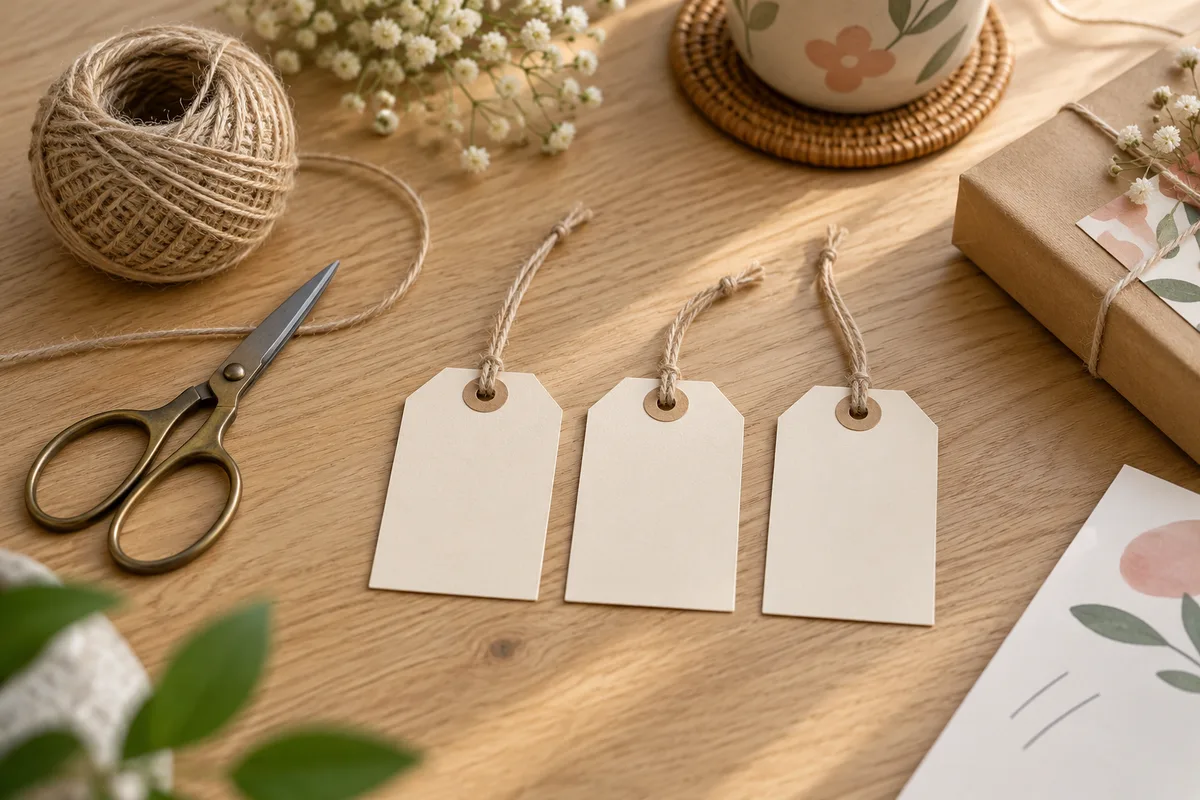
A good test is to write the line on a small paper tag, no larger than the piece itself, and look at it from across a room. If it reads clearly and still feels like the person, you have found it.
Match the phrase to the size of the object
The same words feel different on different objects. A useful rule is to match the length of the line to how close the receiver will be when they read it.
- Held in the hand (keychain, small ornament): a name, an initial or two or three words at most.
- Read at arm’s length (mug, tumbler): a short title plus a name, or a short phrase of up to four words.
- Read from across a room (tee, poster, canvas): a short phrase or a short list of names, in bolder layouts.
Different pieces have different layouts, so check the preview for each one. Our guide to writing the words for a personalized gift goes into tone, and the personalization steps show where each field lives.
Check the preview, then check it again
What you see next to the fields is what is printed. Read your phrase slowly, then read it as if you were the receiver, then read it once more out loud. Look at capital letters, the spacing between words and the balance of the lines. If the field flags a line as too long, shorten it rather than hoping it will work. For more, see our post on previewing before you order.
FAQ
How many words fit on a small ornament?
It depends on the design, so check the preview. As a rule, a name, a date or two to four words works best.
Will the text shrink if my line is too long?
No. The text size is fixed so it stays readable. The field warns you before you can add the item to your bag.
Can I use emojis or symbols?
Use plain letters and numbers. If you want a symbol, choose a design that includes one rather than typing it.
Can I change the phrase after I order?
Contact us straight away with your order number. Changes are only possible before the order is in production. The contact page has the details.
Where can I find more ideas?
Browse ornaments and keychains, or try the gift finder.