

Most of us have stood in front of a blank card, trying to find words for someone who has lost a person they love. The wish to say the right thing is strong, and so is the fear of saying the wrong one. That fear often leads to silence, which is the one choice nearly everyone regrets afterward. A short, plain note, sent without any expectation, is almost always better than nothing.
This is a small guide to writing that note, to the phrases that tend to land badly, and to quiet gifts that can sit beside a card. It does not offer advice about how anyone should feel, because there is none to give. Grief looks different in every person and in every family, and what helps one person may not help another. What follows is only a way of showing up with care.
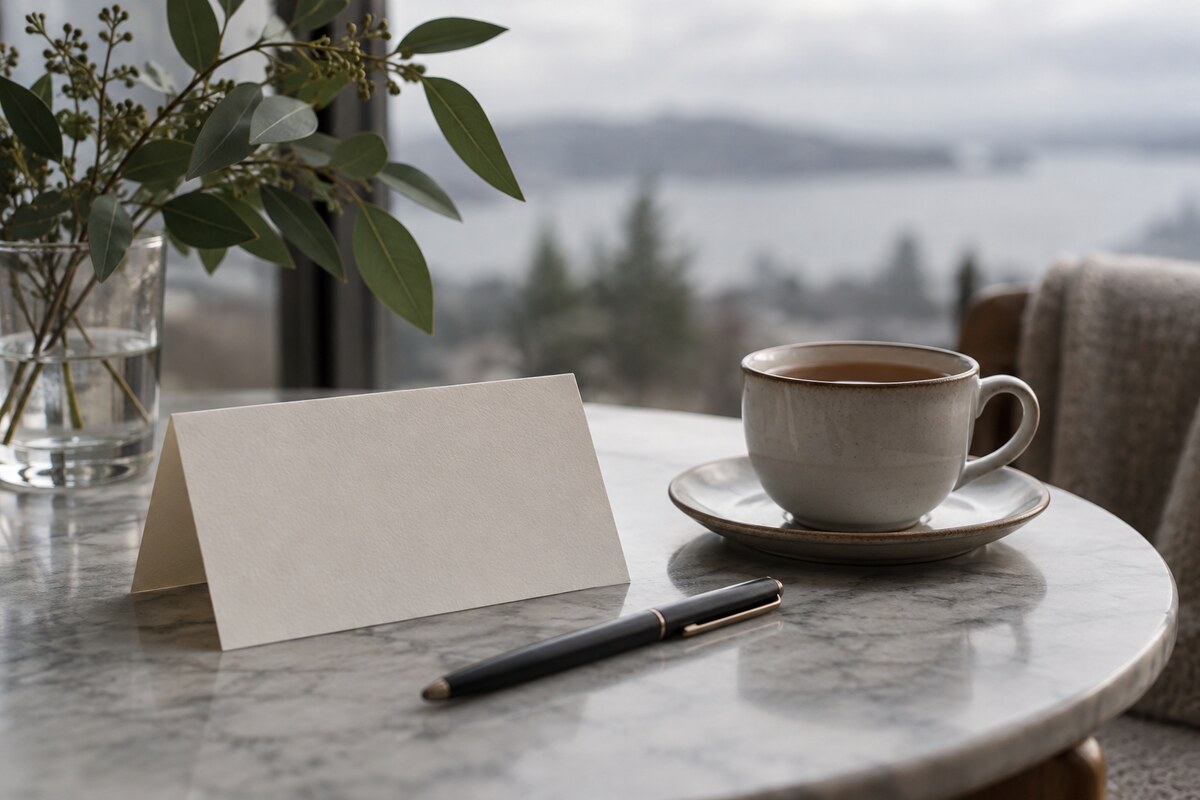
Begin with what you can truthfully say
You do not have to explain loss, find a reason or offer a view about what happens next. The most useful sentences are often the simplest: that you heard, that you are thinking of them, that you are sorry. If you knew the person who died, a short memory is a gift in itself, because it tells the grieving person that their loved one was seen by others.
- “I was so sorry to hear about [name]. I am thinking of you.”
- “I am here, and there is no need to reply.”
- “I will always remember [a specific, kind moment].”
- “I do not have the right words. I wanted you to know I care.”
If you did not know the person well, say that plainly and focus on the one grieving. “I did not know [name] as well as I would have liked, but I know how much they meant to you” is both honest and kind.
Phrases that tend to land badly
People who are grieving often remember, for years, the sentences that hurt. Most of those sentences were meant kindly. A few are worth keeping out of a card.
- Explanations. “Everything happens for a reason,” “they are in a better place,” and “at least they are no longer suffering” are statements about meaning. The person may not share that view, or may not be ready to hear it.
- Comparisons. “I know exactly how you feel” can sound as if the loss is being measured against another one. “I cannot imagine, but I am here” is safer.
- Instructions. “You need to be strong,” “you should try to rest,” and “time heals” give directions that nobody asked for.
- Questions that require a reply. “How are you doing?” can be tiring to answer. A statement, such as “I am thinking of you,” asks nothing.
- Silver linings. Leave out any suggestion that something good came from the loss.
If you are worried that you have already said something clumsy, a brief, warm follow-up is better than avoiding the person. “I wish I had found better words. I am still thinking of you” is enough.
When the loss is a pet
For many people, the death of a pet is a deep loss, and it is often met with less understanding than it deserves. If you are writing to someone who has lost an animal, treat the loss as the real one it is. Use the pet’s name, mention something specific you remember, and avoid any suggestion that it is less serious than the loss of a person.
- “I was so sorry to hear about [pet’s name]. They were so clearly loved.”
- “I remember how [pet’s name] always [small, specific habit]. I will miss that, too.”
- “There is no right way to feel about this, and I am here.”
Five Swallows in a Gentle Arc Canvas Print. Five swallows fly in a gentle arc, drawn in cream and sky blue, with a fine dotted trail showing the path they have already crossed. The wings are light and the spacing is open, which gives the motif a hopeful, forward-looking feeling.
Quiet gifts that sit beside a note
A gift is never required, and for some people a card is more than enough. When you do want to send something, choose an object that makes no demands. It should be easy to receive, easy to put down and not tied to a response. Keep the color and tone calm and leave humor out unless you know the person well enough to be certain.
Something to hold or to wrap around the shoulders
Dandelion Seed Head Drifting Away Fleece Blanket. A dandelion seed head stands in grey and teal on white, with a few seeds drifting away as if someone had just made a wish. The image is delicate, airy and still full of quiet motion.
Something quiet for a shelf
Quiet Meadow Memorial Stone is another design to consider for this gift idea.
Something with a name
Weeping Willow Branches with Dewdrops Ornament. Long willow branches sweep downward in green and gold, their slender leaves dotted with tiny dewdrops that catch the light. Small leaf-shaped pendants dangle at the ends, adding a delicate rhythm, and the whole artwork moves like a breeze across a quiet riverbank.

Names and dates: take care
Names are the most important detail, and the easiest to get wrong. Check the spelling with someone who knows, and use the name the family used. Nicknames can be very tender, but only if you are sure they are welcome.
Dates are more delicate. Some people find a date comforting, and others find it hard to see displayed. If you are not certain, choose the name alone, or leave the object without any wording. Do not add religious symbols, verses or phrases, because you cannot know what the person or the family believes or prefers. Look at the preview before you pay, so you can see exactly what will appear. Our post on gentle gifts for remembrance offers a calm starting point if you are still deciding.
Timing, and not expecting a reply
There is no deadline for a sympathy note. A card that arrives in the first few days is welcome, and so is one that arrives a few weeks later, when the first wave of attention has faded and the person may feel that others have moved on. Many people say that the messages that mattered most were the ones that came later.
Do not ask for a response, and do not be hurt if none comes. Someone who is grieving may not have the energy to thank you, and that is not a judgment. If you want to send something, the shipping information explains how delivery works for different addresses, and it is worth letting a close relative know a parcel is coming, so that it does not arrive unexpectedly.
If you are writing for a group
When a team, a class or a street wants to send something together, a card signed by many people, with a line from each, is a simple and kind gesture. Keep every line short, and let people who knew the person add a memory. Avoid collecting money in a way that puts pressure on anyone, and let the person organizing the card be someone close to the family if possible. For a workplace, a card and a short note from a manager are often the right size, and you can read about workplace gifts that stay professional for related questions of tone.
Small acts alongside a card
A note and a gift are only part of it. Many people say that practical offers matter just as much, as long as they are specific and easy to accept. “I will drop off dinner on Thursday. Leave the cooler outside if you do not feel like talking” is easier to accept than “let me know if you need anything.” Specific offers take the burden of asking off the grieving person. Offer one thing you can actually do, and then do it.
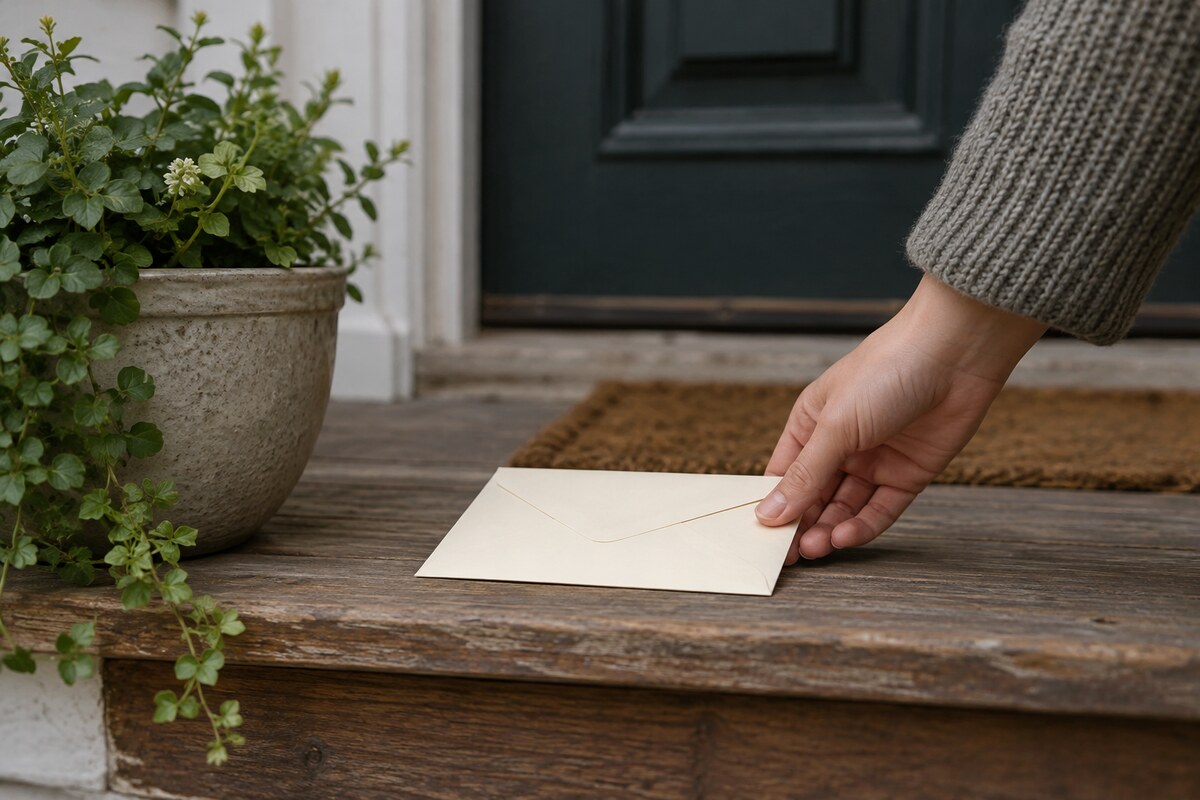
These gift ideas include made-to-order designs. Choosing finished artwork does not mean an item is in stock or ready for immediate delivery. Some selections use finished artwork; only choose custom text where the listing offers it. Check each product’s options and the shipping information before planning when to give it. The photographs illustrate gift-giving ideas; use each product’s listing to see its own design.
Weeping Willow Branches with Dewdrops Ceramic Ornament
- Free gift
$19.95In stock
Five Swallows in a Gentle Arc Canvas Print
- Free gift
$39.95In stock
Quiet Meadow Memorial Stone
- Free gift
$24.95In stock
Dandelion Seed Head Drifting Away Fleece Blanket
- Free gift
$54.95In stock




FAQ
Is it appropriate to send a gift, or should I only send a card?
A card is always appropriate. A gift is optional, and it should be quiet and easy to receive. If you are not sure, send the card first and decide later.
What if I did not know the person who died?
Say so honestly, and focus on the person who is grieving. A short note that says you are thinking of them is enough.
Should I include a date on a memorial gift?
Only if you are sure the person would want it. When in doubt, choose a name alone or no wording at all.
What should I do if I have not been in touch for a while?
Write anyway, and keep it simple. “I have been thinking of you and wanted you to know” is a complete note, and there is no need to apologize at length.